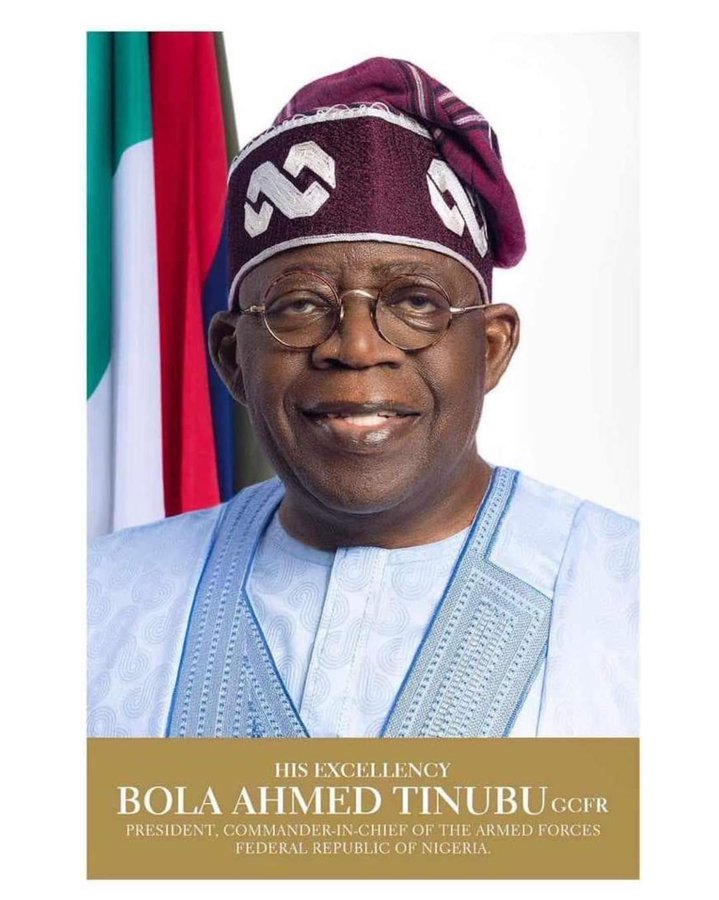
President Bola Tinubu

In his inauguration speech, President Bola Ahmed Tinubu touched on the monetary policy and indicated his preference for a low interest rate regime to stimulate economic growth and employment. President Tinubu is cosmopolitan, innovative and progressive. He is dogged, hardworking and a strategist.
In an article I wrote in 2015, titled, ‘’A Bull and the Fallen Rider’’, which was published in Thisday newspaper of July 2, 2015, I noted that ‘’Tinubu is a strategist and a major vessel God used to give Buhari victory. He worked hard to gentrify and package Buhari and did everything to ensure his wide acceptance at the polls.’’
All well-meaning Nigerians are looking up to the President and hoping for the best for the country under his leadership. His indication for a low interest rate regime is noble. But it is important to understand that nothing should be cast on stone, and that it is inflation that determines interest rate. Across the world, central banks have a phobia for inflation and tend to comply with the concept of monetarism by Milton Friedman to fight against it.
Milton Friedman was a great American economist and monetarist. He was a Nobel Laureate and the most influential economist in the 20th century who advised former USA President Ronald Reagan and UK Prime Minister, Margaret Thatcher. Friedman noted that ‘’inflation is always and everywhere a monetary phenomenon’’, and that ‘’increased monetary growth increases prices but does not really affect output.’’
He believed that the economy should be controlled predominantly by the supply of money and warned economists and policy makers not to try and stimulate economic growth at the cost of just a little more inflation. Central banks often complied with Friedman’s advice and adopt tight monetary policy. They set high interest rate so that credit is not available to the public in a bid to control and decrease inflation.
In 2017, Central Bank of Nigeria raised and retained the Monetary Policy Rate(MPR) at 14 per cent to fight inflation and inflation dropped consistently from a high of 19 per cent in January to 17.78 per cent in February. It further decreased to 15.90 per cent in November and slided to 15.37 per cent in December. It further dropped to 14.33 per cent in February 2018 and to 13.34 in March.
Similarly, Paul Volcker, a former Chair, US Federal Reserve (1979-1987) also used a tight monetary policy to fight inflation. Inflation had risen to 9 per cent and 11 per cent, far above the band of 2- 5 per cent known as the ‘’sweet spot’’ where Fed funds are often kept to maintain a healthy economy.
Volcker pushed interest rate up so high that it threw the economy into a deep recession. He did it on purpose. Inflation increased from 12 per cent to 14 per cent but Volcker maintained his stance. But, at a threshold, in 1981, inflation rate dropped to 9 per cent and progressively to 6 per cent and further to 4 per cent. And Paul Volcker became a hero and was nicknamed as ‘’the man who quashed inflation.’’
In recent time, CBN had consistently increased the MPR which is now at 18 per cent. At that rate, it is expected that inflation rate which is presently at 22.04 per cent would have dropped considerably, considering also that the Bank had applied two other complementary policy options that could have contributed to curb inflation. They include the various initiatives under development financing which support agriculture and manufacturing and which aim to boost the supply side and GDP.
The other one is the recent demonetization ( naira redesign) policy which CBN said was introduced to also fight inflation by mopping up excess money, especially illegal money in the hands of kidnappers, bandits and corrupt politicians which are outside the banking system.
Reportedly, a total of N1.8 trillion was mopped up from currency outside banks and the currency in circulation was reduced to N1.4 trillion in January 2023. But the policy came under criticism and suffered dislocation with severe and regrettable consequences.
CBN tried to rein in inflation with tight monetary policy and other supplementary measures, but it would seem that the federal government fuelled inflation with its growing debt stock. According to the Debt Management Office(DMO), the Federal government’s total debt stock (external and domestic) rose from N39.56 trillion ($95,77 billion) in December 31, 2021 to N46.25 trillion( $103.11 billion) in Q4 2022, an increase by N6.69 trillion( $7.34 billion) in one year. The debs were used to fund budgets, execute projects, issue promissory notes and settle some liabilities.
Experts have noted that incurring external and internal debts beyond the GDP leads to inflation and reduces confidence in the currency, thus, the need to avoid a runaway national debt. And a country commits what is known as ‘’original sin’’ when it procures foreign debt that are not denominated in their own currency, which is the case with Nigeria and other developing countries.
According to Ricardo Hausmann, a Professor of the Practice of Economic Development at the John F. Kennedy School of Government, Harvard University, foreign debts leads to an aggregate currency mismatch on the balance sheet of the debtor country, and when economic conditions worsen, the country’s exchange rate depreciates.
Countries are advised to maintain fiscal responsibility and be cautious in accumulating debt, maintain effective money supply and avoid inflation. Inflation is a nightmare to citizens and central banks have a phobia for it. That is why central banks, including CBN, would rather opt to fight inflation rather than stimulating growth, in compliance with Milton Friedman’s advice.
President Tinubu is meticulous and may wish to be cautious with fiscal policies. CBN as an independent apex institution should have the latitude to operate monetary policies such as the Bank deems to be most appropriate under prevailing economic circumstances. Interest rate reduction which speak of an expansionary monetary policy, and a tight monetary policy which is contractionary have their pros and cons.
Interest rate reduction which President Tinubu indicated in his inauguration speech can stimulate economic growth and employment, but it can also create easy money which can escalate inflation, aggravate default rate in bank loans and create a knock-on effect in the banking system and lead to financial system instability which is undesirable. Some experts believe that the extreme interest rate reduction by Alan Greenspan, a former Chair, US Fed (1987-2006) created easy money which caused the 2000 dot-com bubble and contributed to the 2008 US housing bubble and Subprime mortgage financial crisis which created domino effect in global financial markets.
Fiscal and monetary policies should be based on practical realities and subjected to a rational comprehensive analysis before implementation in order to minimize the unintended consequences and maximize the intended objectives for the greater benefit of the economy.
Nwobu, a Policy Analyst and Chartered Stockbroker wrote via arizenwobu@yahoo.com. Tel: 08033021230