Skip to content
July 20, 2026
  • Home
  • About us
  • Contact us
  • Newsletter
  • Privacy Policy
Political Economist

Political Economist

A liberal News reporting Politics, Sports, Business, Commentaries

  • Home
  • National News
    • Metro News
      • metro
    • Society
    • Crime and Justice
  • Special Reports
    • Investigation
    • Features
    • Interviews
  • Opinion
    • Commentaries
    • Perspectives
  • Press Releases
  • International News
  • Business & Economy
  • Politics
Watch Online
  • Home
  • Business & Economy
  • Poor, indebted countries need collective relief, African leaders say
  • Business & Economy

Poor, indebted countries need collective relief, African leaders say

Admin February 28, 2025
Xenophobia

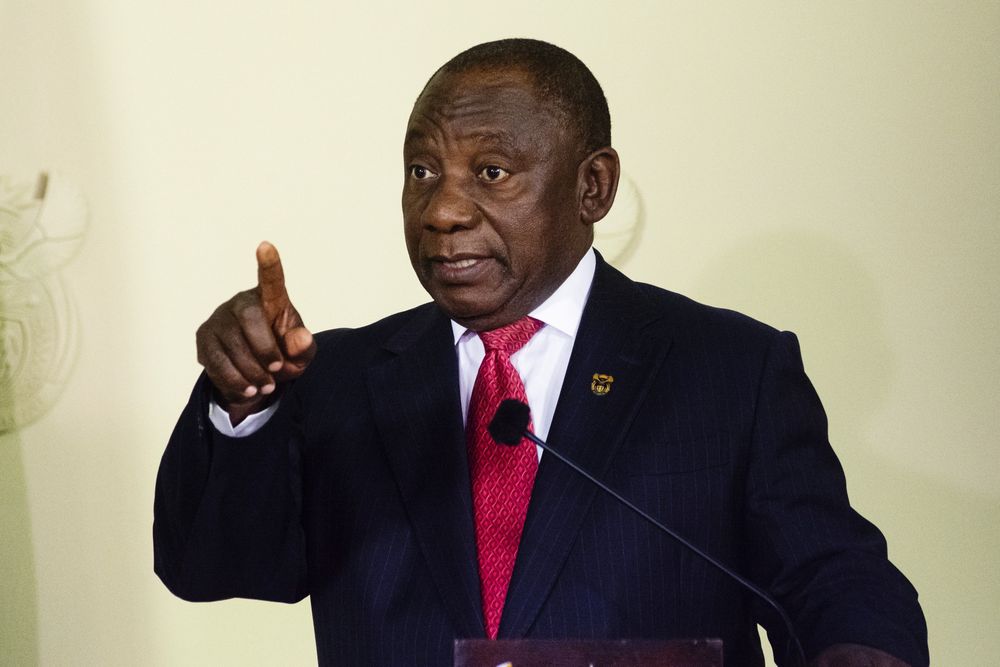
President Cyril Ramaphosa of South Africa

February 28, 2025

Growing external debt burdens are crippling the world’s poorest countries, a group of former African leaders warned on Thursday as they pushed for a new programme of collective relief from private, bilateral and multilateral creditors.

South African President Cyril Ramaphosa is hoping to use his country’s current presidency of the Group of 20 nations to champion the cause of the developing world, including action on debt relief and a more equitable global finance architecture.

But the effort faces formidable challenges given the “America First” agenda of U.S. President Donald Trump’s administration, which is carrying out massive cuts in foreign aid contracts and overall U.S. assistance around the world.

Speaking at a news conference on the margins of a G20 finance ministers meeting in Cape Town, ex-Nigerian president Olusegun Obasanjo, who is chairing the African Leaders Debt Relief Initiative, said debt was strangling development.

“The money that should have gone into essential areas of human welfare and human development, education, health, nutrition, is given to pay debt that seems to be interminable,” he said.

The initiative, backed by seven former African heads of state, is calling for a plan modelled after the Highly Indebted Poor Countries (HIPC) programme of the 1990s, to allow debtors to deal with their creditors collectively.

RESTRUCTURING DEBT

The plan would include restructuring private debt and bonds as well as loans from official creditors, they said, and cover heavily indebted nations in Africa, Asia, the Caribbean and Latin America.

It would also seek to lower borrowing costs for developing countries.

The United Nations Development Programme called on Tuesday for a similar deal, warning that a worsening debt crisis among developing nations was draining their economies of much-needed liquidity.

The UNDP calculated that a HIPC-style plan that reduced debt stock by 60% could save the world’s 31 poorest countries nearly $80 billion.

A previous G20 debt relief initiative – known as the Common Framework – that aimed to enable debt restructuring on a case-by-case basis has not worked well, the African leaders said. Only a handful of countries have utilised that initiative.

“What the leaders are calling for is a framework where all countries can be brought in at the same time,” said Patrick Njoroge, an adviser to the initiative.

“The case-by-case issue is problematic. It’s also taking a long time.”

Global multilateralism is facing growing headwinds.

The G20 finance ministers meeting has been undermined by high-level absences and concerns over the impact of aid cuts by major economies including the United States and Britain.

“That is the more reason why this initiative should move aggressively,” said Joyce Banda, a former president of Malawi.

“We have to turn around our economies ourselves and for that to happen, we must start from a clean slate. These debts have to be forgiven.”

REUTERS

  • Facebook
  • Share on X
  • LinkedIn
  • WhatsApp
  • Email
  • Copy Link
Tags: Cyril Ramaphosa HIPC President Olusegun Obasanjo UNDP

Post navigation

Previous Insurgency: FG expands rehabilitation initiative to Northwest states
Next Indian Bags 10 Years for Fraud in Lagos

Related Stories

West Africa’s ECOWAS bloc signs agreement backing Nigeria-Morocco atlantic gas pipeline, statement reports regional heads
  • Business & Economy

West Africa’s ECOWAS bloc signs agreement backing Nigeria-Morocco atlantic gas pipeline, statement reports

July 20, 2026
NLNG honours Professor Barth Nnaji for his contribution to science and innovation
  • Business & Economy

NLNG honours Professor Barth Nnaji for his contribution to science and innovation

July 20, 2026
IPMAN to FG: Stop issuing licences for petroleum products import Fuel crisis
  • Business & Economy

IPMAN to FG: Stop issuing licences for petroleum products import

July 20, 2026
logo

Political Economist is a liberal news magazine with global affiliations.

At Political Economist, we promote free enterprise and act as a catalyst for the growth of knowledge economy. We are proudly pan-Nigeria yet richly spiced with African and global news. We offer a fair and balanced news reportage presented by our team of well-heeled professional journalists. <

About us

  • 5 Olutosin Ajayi Street, By CPM Church, Ajao Estate, Lagos State, Nigeria
  • +234 805 680 1124
  • info@politicaleconomistng.com

Follow

Subscribe to notifications

You may have missed

Olisa Agbakoba to chair GOCOP 2026 conference in Lagos
  • National News

Olisa Agbakoba to chair GOCOP 2026 conference in Lagos

July 20, 2026
Court sentences 2 Ansaru commanders to life imprisonment Federal High Court
  • National News

Court sentences 2 Ansaru commanders to life imprisonment

July 20, 2026
Nigeria’s Erebor elected ATU confab preparatory committee chair
  • International News

Nigeria’s Erebor elected ATU confab preparatory committee chair

July 20, 2026
Reps Committee commences consideration of revised State Police establishment bill spokesman
  • National News

Reps Committee commences consideration of revised State Police establishment bill

July 20, 2026
  • Home
  • About us
  • Contact us
  • Newsletter
  • Privacy Policy
Copyright © All rights reserved. | DarkNews by AF themes.