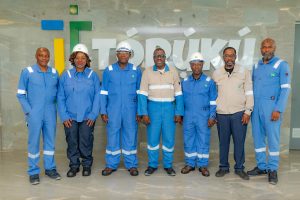


Bashir Bayo Ojulari GCEO NNPCL
The Nigerian National Petroleum Company (NNPC) Limited has refuted media reports alleging missing or unaccounted funds from crude oil cargoes lifted by its trading subsidiary, Duke Oil Company Incorporated (now NNPC Trading S.A.), under the Direct Sale Direct Purchase (DSDP) programme.
In a statement issued on Tuesday in Abuja, the Chief Corporate Communications Officer of NNPC Limited, Andy Odeh, maintained that every cargo lifted under the arrangement was fully accounted for and reconciled.
Odeh explained that recent media reports misinterpreted the absence of standalone dollar receipts for certain DSDP cargoes as a financial “gap.” According to him, separate dollar receipts were not generated for those transactions because, under the terms of the DSDP contracts, the proceeds from crude oil sales were directly set off against the cost of refined petroleum products supplied for the Nigerian market.
“The $2.04 billion cited is the gross value of 29 such cargoes, and the reports themselves concede that the records point to reconciliation within the group rather than any loss,” Odeh stated.
He clarified that under the DSDP framework, Duke Oil and other participating traders lifted crude oil priced in US dollars and delivered refined products such as petrol, which were sold domestically in Naira. The value of the delivered products was subsequently reconciled against the corresponding crude value, with the entire transaction cycle captured in the audited financial statements of the relevant entities.
Providing a detailed breakdown of the 59 cargoes referenced in the reports, Odeh noted that the records themselves confirm full accountability across all beneficiaries:
30 cargoes were settled directly in US dollars.
28 cargoes (valued at $1.96 billion) were remitted in Naira to either the NNPC Group Treasury or NNPC Upstream Investment Management Services (NUIMS) accounts.
One remaining cargo, a February 2023 Bonga tax-oil lifting valued at $75.9 million was paid directly into the then-designated Federal Inland Revenue Service (FIRS) dollar account.
Odeh also pushed back against attempts to portray Duke Oil’s relationship with NNPC as secretive, noting that describing the firm as “NNPC wearing another name” frames a long-established corporate structure as a new revelation.
He pointed out that Duke Oil was incorporated in 1989 as a wholly owned NNPC trading subsidiary, a fact openly documented in NNPC’s corporate history, audited financial statements, and the Nigeria Extractive Industries Transparency Initiative (NEITI) 2023 industry report.
“Utilising a dedicated trading subsidiary is standard global industry practice, and all inter-company transactions are properly reported as related-party transactions under International Financial Reporting Standards (IFRS),” Odeh said, reaffirming NNPC Limited’s commitment to transparent financial reporting and full accountability across its crude liftings and product deliveries.