
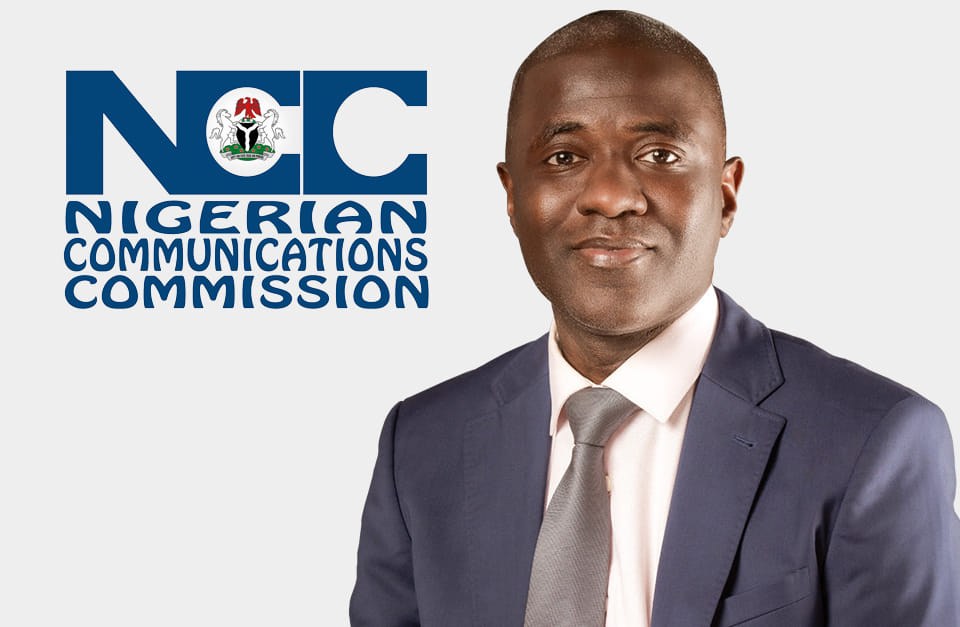
Dr Aminu Maida NCC EVC

The Nigerian Communications Commission (NCC) on Wednesday said that as of August 2025, Nigeria’s broadband penetration stood at roughly 48.81 per cent, far less than the projected 70% at the end of this year.
The Executive Vice-Chairman (EVC), NCC, Dr Aminu Maida, made this known while delivering his keynote address at the Rural Connectivity Summit in Lagos.
The Rural Connectivity Summit, which is the first edition in Nigeria, had the theme: “Rethinking Digital Connectivity to Unlock Rural Economic Potentials.”
Maida, who was represented by the Controller, NCC Lagos Office, Mr Tunji Jimoh, said further that urban areas in Nigeria enjoyed up to 57 per cent internet access, while rural communities lagged significantly at only 23 per cent.
In line with Nigeria’s National Broadband Plan (NBP) 2020-2025, the nation is expected to achieve a 70% broadband penetration rate by the end of 2025.
Maida said further that the 2025 International Telecommunication Union’s ICT Development Index (IDI) ranked the country at 137th position out of 164 economies with a score of 52.9.
He noted that the score was an improvement from 46.9 in 2024.
The EVC decried this poor ranking, saying it was due to persistent gaps in internet usage (39.2 per cent) and household access (40.1 per cent)
Maida said in his address titled, “Leaving Nobody Behind: Leveraging Regulatory Advantages to Bridge Nigeria’s Digital Divide,” that he was reaffirming its commitment to bridging the country’s stark urban-rural digital divide.
He said that a 10 per cent increase in broadband penetration could drive a 1.38 per cent rise in Gross Domestic Product (GDP) in developing economies.
“Over 45 per cent of Nigeria’s population lie in rural areas, yet they face systemic exclusion from digital opportunities, broadband penetration and digital lag.
“The accurate measure of connectivity is not in megabits per second, but in the economic value it creates or loses.
“A community without digital connectivity is functionally invisible, cut off from modern education, global markets, specialised healthcare and opportunity,” he said.
Maida said the NCC’s regulatory and financial intervention was a multi-pronged approach to combating the divide, driven by its Universal Service Provision Fund (USPF).
He announced the recent launch of the Nigeria Digital Connectivity Index (NDCI) on Oct. 9, 2025, an annual public scorecard designed to measure each state’s digital readiness and foster accountability.
Maida added that the telecommunications sector recorded about 19,384 fibre cuts, 3,241 equipment thefts, and over 19,000 denials of access to sites between January and August 2025 alone.
To counter this, he noted that the NCC championed the Critical National Information Infrastructure (CNII) Presidential Order, signed in June 2024, which empowered law enforcement to combat vandalism.
He urged state governments to continue to adopt Zero Right of Way policies and appealed to communities to protect telecom assets, and to view them as their “bridge between backwardness and global relevance.”
In his address, Mr Tony Emoekpere, President, Association of Telecommunication Companies of Nigeria (ATCON), said that rural connectivity was key.
Emoekpere said that everyone knew the impact of broadband when it comes into an area, noting that it impacted positively on lives, businesses and other areas.
He stressed that broadband was not a subjective discussion but a need, with the issue being how to achieve it.
“We need to move away from talk shop into action, and I would encourage the convener of this summit to ensure that at the end of the day we are looking at actionable points and identifying potential drivers,’’ he said.
The Co-Founder, Infratel Africa, Dr Tola Yusuf, in his presentation, “Incentivising Digital Infrastructure Deployment as the Backbone of Successful Rural Connectivity”, said that the backbone to rural prosperity was digital connectivity.
Yusuf said that, however, the backbone of connectivity was the right incentive structure.
He said that all should look at the right incentive structure, put the model in place, keep the conversation going and then the narrative would begin to change.
Yusuf said: “So, this synergy approach is just restrictive and all these conversations are what we need to put together to be able to work this thing to go to the next stage of rural connectivity in Nigeria.’’
In his welcome address, the Convener of the summit, Omobayo Azeez, said that the summit was dedicated to one of the most urgent challenges and greatest opportunities of our time.
Azeez stressed that bridging Nigeria’s digital divide promoted inclusion and drove socioeconomic growth.
He said that the gathering was more than another event on the technology calendar; it was, in truth, a national call to action.
According to him, it is a call to confront the realities that continue to hold millions of Nigerians back from participating fully in the digital economy.
“According to official data, more than 20 million Nigerians still live without any form of connectivity access.
“That number is not just a statistic; it represents families, farmers, teachers, traders, and health workers. People who remain cut off from the transformative power of ICT,’’ he said.
The convener said that to further put it in perspective, the figure of digital non-inclusion exceeded the population of some African countries.
Azeez noted that from indications, this problem was not a question of capability, because the technologies for accelerated digital inclusion existed.
According to him, also, the operators and investors are ready, and in fact, the opportunities are clear.
He said that the real challenge, however, lay in political will, policy consistency, and coordinated commitment.
Azeez said that rural connectivity must become a deliberate national priority in Nigeria, and not just a footnote in its development agenda.
The convener said that connectivity was more than cables and towers, it was access to education, to healthcare, to markets, to governance, and to opportunity.
He said: “Every unconnected community represents lost potential of a student who cannot learn remotely, a farmer who cannot access market prices, a clinic that cannot receive telemedical support.’’ (NAN)