Skip to content
August 6, 2026
  • Home
  • About us
  • Contact us
  • Newsletter
  • Privacy Policy
Political Economist

Political Economist

A liberal News reporting Politics, Sports, Business, Commentaries

  • Home
  • National News
    • Metro News
      • metro
    • Society
    • Crime and Justice
  • Special Reports
    • Investigation
    • Features
    • Interviews
  • Opinion
    • Commentaries
    • Perspectives
  • Press Releases
  • International News
  • Business & Economy
  • Politics
Watch Online
  • Home
  • International News
  • New bed nets that ‘ground’ mosquitoes could boost malaria fight
  • International News

New bed nets that ‘ground’ mosquitoes could boost malaria fight

Admin March 25, 2022
Malaria

March 25, 2022

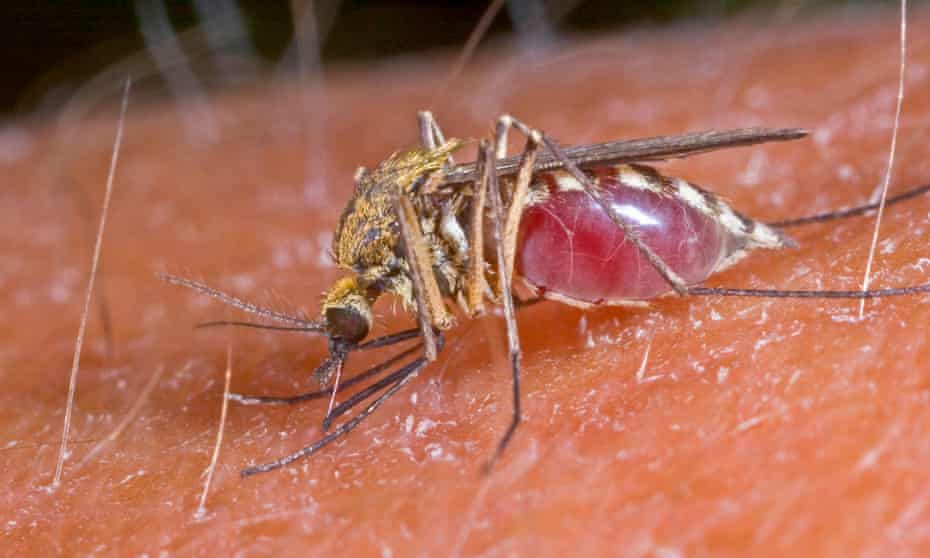
Bed nets treated with a new kind of insecticide cut malaria cases in children by almost half in a large trial in Tanzania, according to a study in The Lancet, raising hopes of a new weapon in the fight against the age-old killer.

Bed nets have been instrumental to the vast progress the world has made in recent decades against malaria, with millions of lives saved. But progress has stalled in the last few years, in part because the mosquitoes which spread the infection have increasingly developed resistance to the insecticide used in existing nets.

In 2020, 627,000 people died of malaria, mainly children in sub-Saharan Africa.

Now, researchers at the London School of Hygiene and Tropical Medicine in the UK , the National Institute for Medical Research and Kilimanjaro Christian Medical University College in Tanzania, and the University of Ottawa in Canada have shown that a new insecticide — the first in 40 years — is both safe and effective in a real-world randomized trial.

The nets, treated with chlorfenapyr as well as pyrethroid, the usual chemical used, reduced malaria prevalence when compared with the existing nets by 43% in the first year and 37% in the second year of the trial.

The study involved more than 39,000 households and followed over 4,500 children aged 6 months to 14 years old. The nets, developed by BASF in Germany and LSHTM, are marginally more expensive than the current nets, at around $3 per item, but the researchers said the savings in preventing cases outweighed the initial increased outlay.

Chlorfenapyr works differently than pyrethroid, effectively grounding the mosquitoes by causing wing cramps and making them unable to fly, and therefore bite, spreading the infection. The chemical was first proposed for use against malaria 20 years ago, and has been used for pest control since the 1990s.

The World Health Organization has already pre-qualified the use of the new nets, but the trial, funded by the British government and the Wellcome Trust, could lead to more widespread recommendations for their use.

“This is the first evidence in real-life conditions,” Dr. Jacklin Mosha, the study’s lead author from the National Institute for Medical Research, Tanzania, told Reuters.

Alongside progress on a malaria vaccine, which was approved by the World Health Organization last year, the team said the net could be another tool in the malaria toolbox. read more

However, they warned that it is important to ensure that mosquitoes do not also quickly develop resistance to chlorfenapyr, if used widely.

REUTERS

  • Facebook
  • Share on X
  • LinkedIn
  • WhatsApp
  • Email
  • Copy Link
Tags: BASF chlorfenapyr Dr. Jacklin Mosha Lancet Wellcome Trust

Post navigation

Previous Nigerian Correctional Service refutes report of smuggling of Indian hemp into facility
Next Google tests catching heart, eye issues from smartphone sensors

Related Stories

Strong El Niño could push 49 million more people into acute hunger, UN agency says WFP
  • International News

Strong El Niño could push 49 million more people into acute hunger, UN agency says

August 5, 2026
Oil prices settle 5% lower after claims of progress in US-Iran talks reserves crude oil
  • Business & Economy
  • International News

Oil prices settle 5% lower after claims of progress in US-Iran talks

August 4, 2026
Seventeen migrants believed dead trying to reach Spain’s Balearic Islands federal government
  • International News

Seventeen migrants believed dead trying to reach Spain’s Balearic Islands

August 4, 2026
logo

Political Economist is a liberal news magazine with global affiliations.

At Political Economist, we promote free enterprise and act as a catalyst for the growth of knowledge economy. We are proudly pan-Nigeria yet richly spiced with African and global news. We offer a fair and balanced news reportage presented by our team of well-heeled professional journalists. <

About us

  • 5 Olutosin Ajayi Street, By CPM Church, Ajao Estate, Lagos State, Nigeria
  • +234 805 680 1124
  • info@politicaleconomistng.com

Follow

Subscribe to notifications

You may have missed

7 abducted Poly students rescued in Ogun outbreak
  • National News

7 abducted Poly students rescued in Ogun

August 6, 2026
ActionAid urges probe of alleged exploitation of Nigerians in Russia ActionAid
  • National News

ActionAid urges probe of alleged exploitation of Nigerians in Russia

August 6, 2026
PFIPC probe: ICPC submits interim report, recommends Adeyemi’s prosecution ICPC
  • National News

PFIPC probe: ICPC submits interim report, recommends Adeyemi’s prosecution

August 6, 2026
African free trade agency taps Nigerian firm for $3.1 billion customs overhaul project AfCFTA
  • National News

African free trade agency taps Nigerian firm for $3.1 billion customs overhaul project

August 6, 2026
  • Home
  • About us
  • Contact us
  • Newsletter
  • Privacy Policy
Copyright © All rights reserved. | DarkNews by AF themes.