The Lagos Water Corporation (LWC) provides public water to only 34,424 registered households, reaching approximately 206,444 people, or 1.03 per cent of the state’s estimated 20 million population, leaving the vast majority of residents reliant on costly private vendors and boreholes.
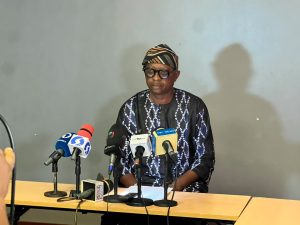
The LWC’s Deputy Director of Corporate Affairs and Brand Management, Mr. Rasaq Anifowoshe, disclosed the figures in an exclusive interview with the News Agency of Nigeria (NAN).
While Lagos State’s total daily water demand stands at 540 million gallons per day (MGD) according to the Lagos State Water Supply Master Plan, the LWC’s installed production capacity is 210 MGD. However, actual production falls far short of even that capacity.
Reviewing 2025 production records, Anifowoshe revealed that the corporation produced 2,633.22 million gallons for the year, an average daily production of just 7.21 MGD, or 3 per cent of its installed capacity.
Anifowoshe attributed the severe shortfall to ageing distribution pipelines, rapid urbanization, population growth, and the urgent need to rehabilitate existing water infrastructure.
The lack of reliable public water supply forces residents across neighborhoods like Iponri, Oworonshoki, Costain, Apapa Road, and Ebute Metta to spend substantial portions of their household incomes on alternative water sources.
High Monthly Costs: In Iponri, resident Adebayo Solomon reported spending ₦1,500 daily on vendor-supplied water, totaling ₦45,000 monthly, an annual burden of over ₦547,000.
Infrastructure Disuse: On Opeoluwa Street, Apapa Road, resident Garuba Alasan noted that the public water facility in his neighborhood has been non-functional for 20 years.
Quality and Health Concerns: Residents purchasing water from mobile vendors expressed distrust regarding water quality. In Ebute Metta, Esther Emokpaire recalled household members developing skin rashes after using vendor-supplied water.
While some communities benefit from philanthropic boreholes or intermittent LWC supply, frequent electricity outages regularly disrupt pumping, driving up prices from private vendors during shortages.
According to the Lagos State Government’s second-quarter 2026 budget implementation report, 36.2 per cent of the approved annual budget for upgrading 15 existing mini and micro waterworks was spent by June 30, alongside 4 per cent of the allocated budget for the long-delayed Adiyan Phase II Waterworks project.
Addressing future strategies, Anifowoshe outlined several planned interventions by the corporation:
Plant Rehabilitation: Overhauling micro and mini treatment plants, including the Ojokoro Mini Waterworks and constructing the Lagos Island Micro Waterworks, which LWC projects could serve over 5.6 million households upon completion.
Network Digitisation: Digitising the distribution network to enable remote monitoring of underground pipes and reduce non-revenue water loss.
Capacity Expansion: Constructing the Igbonla 100 MGD water treatment plant to meet surging water demand along the Lekki-Epe corridor.
For millions of Lagosians currently paying premium rates for basic water access, the practical success of these initiatives will depend on whether they translate into reliable, running taps across the metropolis. (NAN)