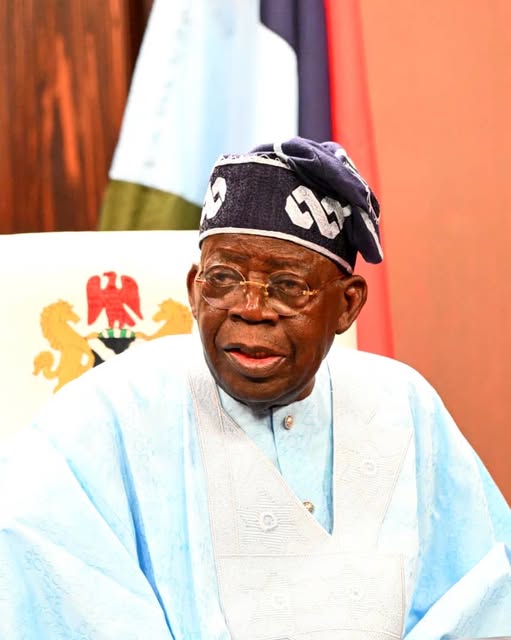
President Bola Tinubu
In a major effort to address Nigeria’s housing deficit and expand access to affordable homeownership, the Federal Government has announced plans to increase the maximum mortgage loan under the National Housing Fund (NHF) from ₦50 million to ₦85 million.
The Minister of Housing and Urban Development, Dr. Muttaqha Rabe-Darma, revealed the proposal at the 15th National Council on Lands, Housing and Urban Development held in Sokoto.
According to the minister, the government aims to disburse 2,000 mortgages this year, with a long-term target of scaling up to 5,000 mortgages annually by 2028.
To achieve these goals, the Federal Mortgage Bank of Nigeria (FMBN) has been directed to disburse at least 70 per cent of the previous year’s total NHF contributions into mortgages each year.
A key highlight of the proposed reforms is a targeted reservation of 30 to 40 per cent of mortgage bookings for workers in the informal sector.
Dr. Rabe-Darma acknowledged that informal workers frequently encounter obstacles when accessing formal housing finance due to irregular incomes and non-conventional financial arrangements.
“The proposed reforms are designed to strengthen the housing finance system and ensure that more Nigerian workers benefit from their contributions to the NHF,” Rabe-Darma stated, emphasising that the initiative will bridge the gap between worker contributions and actual finance delivery.
Additionally, the minister pointed to the recently launched Diaspora Mortgage Programme as a key mechanism enabling Nigerians abroad to invest safely in property back home.
He also referenced Rwanda’s successful institutional and mortgage-refinancing reforms as a valuable model for Nigeria’s expanding mortgage market.
To strengthen sector oversight, the minister announced plans to establish a National Housing Finance Authority to serve as a unified regulatory body, enhancing accountability and improving performance across the country’s housing finance industry.
Beyond mortgage reforms, the ministry reaffirmed its commitment to boosting physical supply by constructing 100 housing units in each of the 774 local government areas across Nigeria.
The minister noted that sustainable housing delivery relies on combining physical construction with a functional, accessible mortgage framework.
Hosting the event, the Governor of Sokoto State, Ahmad Aliyu, underscored the broader social impact of housing, stating that it “promotes human dignity, security, family stability, and hope for the future.”
Governor Aliyu highlighted ongoing initiatives in Sokoto, including the 500-unit Sokoto New City Housing Project and housing units built in partnership with the United Nations Development Programme (UNDP) for Internally Displaced Persons (IDPs) and low-income earners.
In a goodwill message, the Chairman of the House of Representatives Committee on Urban Development and Regional Planning, Rep. Awaji-Inombek Abiante, urged critical policy updates. Abiante advocated for:
Single-digit mortgage interest rates
Transparent and efficient land registration processes
Increased adoption of locally sourced building materials to reduce construction costs
A comprehensive review of housing prices
The introduction of a National Housing Identification Number
The Sultan of Sokoto, Alhaji Sa’ad Abubakar, also urged the government to keep low-income earners at the forefront of housing programs, assuring full support from traditional leaders across the nation.
Organised by the News Agency of Nigeria (NAN), the national council brought together housing ministers, state commissioners, and agency heads from across Nigeria to review and approve key resolutions.
The adopted framework will serve as an operational guide for stakeholders in the built environment to accelerate inclusive housing delivery nationwide.