Skip to content
July 20, 2026
  • Home
  • About us
  • Contact us
  • Newsletter
  • Privacy Policy
Political Economist

Political Economist

A liberal News reporting Politics, Sports, Business, Commentaries

  • Home
  • National News
    • Metro News
      • metro
    • Society
    • Crime and Justice
  • Special Reports
    • Investigation
    • Features
    • Interviews
  • Opinion
    • Commentaries
    • Perspectives
  • Press Releases
  • International News
  • Business & Economy
  • Politics
Watch Online
  • Home
  • International News
  • Global gas flaring rises to highest level since 2019- World Bank
  • International News

Global gas flaring rises to highest level since 2019- World Bank

Admin June 21, 2024
emission

June 21, 2024

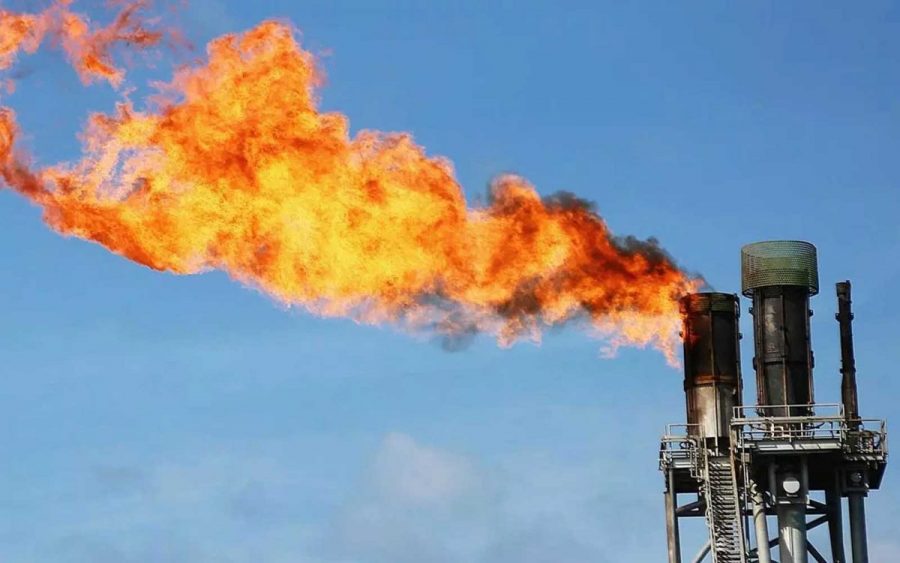
The amount of gas flared worldwide in 2023 rose by nine billion cubic meters (bcm) to 148 bcm, its highest level since 2019, a World Bank report has said.

This is contained in a statement by the World Bank, on its new satellite data on Global Flaring and Methane Reduction (GFMR) Partnership on Friday.

The report said the increase resulted in an additional 23 million tonnes of carbon dioxide equivalent emissions, an amount similar to adding about five million cars to the roads,

The statement quoted Demetrios Papathanasiou, World Bank’s Global Director, Energy and Extractives Global Practice, as saying :

“Millions of people still lack access to basic energy and greenhouse gas emissions continue to grow, while huge volumes of gas continue to be wastefully flared every year.

“Capturing and using this wasted gas could displace dirtier energy sources, reduce greenhouse gas emissions, and generate enough power to double the amount of electricity provided in Sub-Saharan Africa.”

The statement also quoted Zubin Bamji, World Bank GFMR Manager, as saying, “the increase in gas flaring is particularly disheartening as it comes after a long-overdue reduction in 2022.

“This sets global gas flaring levels back to what we experienced in 2019. We’re hopeful that this is somewhat of an anomaly and the longer-term trend will be dramatic reductions.”

The report showed that gas flaring released harmful pollutants, including black carbon and unburned methane, which contribute to climate change and pose risks to both people and the planet.

It also showed that eliminating gas flaring would avert at least 381 million tonnes of carbon dioxide equivalent emissions being released into the atmosphere each year.

“ When productively used, wasted flared gas can help displace dirtier energy sources, increase energy access in some of the world’s poorest countries, and provide many countries with much-needed energy security.”

It added that the World Bank’s annual Global Gas Flaring Tracker Report is a tool for monitoring and understanding the state of flaring worldwide and the progress made towards achieving Zero Routine Flaring by 2030.

It said the World Bank’s GFMR Partnership, together with the Payne Institute at the Colorado School of Mines, had developed global gas flaring estimates based on observations from a satellite.

The satellite, the bank said was launched in 2012 and operated by the U.S. National Oceanic and Atmospheric Administration.

“The advanced sensors of this satellite detect the heat emitted by gas flares as infrared emissions.

“GFMR is a multi-donor trust fund composed of governments, oil companies, and multilateral organisations committed to ending routine gas flaring at oil production sites across the world.

“GFMR is also committed to reducing methane emissions from the oil and gas sector to near zero by 2030.”


  • Facebook
  • Share on X
  • LinkedIn
  • WhatsApp
  • Email
  • Copy Link
Tags: World Bank Zubin Bamji

Post navigation

Previous Just in: Nigeria’s total debt stock hits N121trn – DMO
Next Obi to Tinubu: Stop downplaying Nigeria’s dire situation

Related Stories

Oil rises on renewed US-Iran hostilities and threat of Red Sea closure crude oil
  • International News

Oil rises on renewed US-Iran hostilities and threat of Red Sea closure

July 17, 2026
50 migrants feared lost in Mediterranean, 10 survive after boat capsizes, security sources say Migrants
  • International News

50 migrants feared lost in Mediterranean, 10 survive after boat capsizes, security sources say

July 14, 2026
Oil jumps 4% as new military strikes threaten Hormuz shipments crude oil
  • Business & Economy
  • International News

Oil jumps 4% as new military strikes threaten Hormuz shipments

July 13, 2026
logo

Political Economist is a liberal news magazine with global affiliations.

At Political Economist, we promote free enterprise and act as a catalyst for the growth of knowledge economy. We are proudly pan-Nigeria yet richly spiced with African and global news. We offer a fair and balanced news reportage presented by our team of well-heeled professional journalists. <

About us

  • 5 Olutosin Ajayi Street, By CPM Church, Ajao Estate, Lagos State, Nigeria
  • +234 805 680 1124
  • info@politicaleconomistng.com

Follow

Subscribe to notifications

You may have missed

Police foils kidnap, cattle rustling attempts, rescues victim in Katsina Police
  • National News

Police foils kidnap, cattle rustling attempts, rescues victim in Katsina

July 20, 2026
Few tankers enter Hormuz to load oil, LNG floating storage rises, data shows
  • Business & Economy

Few tankers enter Hormuz to load oil, LNG floating storage rises, data shows

July 20, 2026
Fuel price uncertainty forces marketers to temporarily halt supply — IPMAN Fuel crisis
  • Business & Economy

Fuel price uncertainty forces marketers to temporarily halt supply — IPMAN

July 19, 2026
Oyo mandates birth certificates, NIN for school enrolment — Perm Sec oyo
  • National News

Oyo mandates birth certificates, NIN for school enrolment — Perm Sec

July 19, 2026
  • Home
  • About us
  • Contact us
  • Newsletter
  • Privacy Policy
Copyright © All rights reserved. | DarkNews by AF themes.