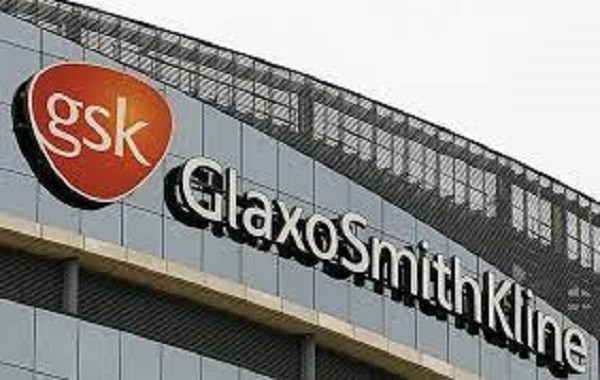
Glaxo SmithKline office

It has become a pattern. Each time a new leader emerges in Nigeria, he globe-trots in search of foreign investors. Whether at national or sub-nationals, Nigerian leaders have found a cheap and unworthy pastime, scouring the world for the always elusive foreign investors.
Absolutely nothing wrong with leaders doing marketing for their countries. Leaders of Western nations are adept at wooing global markets for their local industries. Except, they are never loud about it. They are subtle in marketing their products and services to Asia and Africa markets. It is strategic marketing wrapped in diplomacy. The only difference is that Western, and now Asian, leaders are marketing their respective countries’ products and services, Nigerian leaders are marketing investment potential in the country. The one has a product/service, the other has potential.
Flashback: February 17, 1994. Then President Bill Clinton announced in a White House ceremony that Saudi Arabia will purchase at least 50 new airliners from U.S. manufacturers, an order worth about $6 billion. That was huge. Get the picture clear. Clinton was US President at that time. He was not a staffer or shareholder in Boeing or McDonnell Douglas, the two famous US aircraft manufacturers that would benefit from the deal. But it took efforts by White House spearheaded by President Clinton to swing the deal. In an instant, over 100, 000 jobs were saved because both companies were going down in valuation and profitability. Both companies were facing hard times and were already laying off workers.
To show how the US government valued the agreement, the announcement came from the White House in what the Los Angeles Times called “an uncommon level of government participation in a commercial transaction that was designed to underscore the Administration’s growing involvement in promoting U.S. exports.”
Reports said the Saudis preferred to buy American planes, rather than the European-made Airbus, only after intensive lobbying by Clinton and by other senior US officials who faced stiff competition for the same business from senior government officials from Britain, France and Germany.
While announcing the deal in the Roosevelt Room of the White House, where he was flanked by then Saudi ambassador, Cabinet members and top officials of Boeing and McDonnell Douglas, Clinton said: “What this demonstrates is that we’re serious about opening markets, we’re serious about competing effectively, we’re serious about working in conjunction with American business and industry to win those battles.”
But the deal did not just happen by a mere Clinton wand. Something had to give for something. That’s what Donald Trump calls the ‘art of the deal.’ Every deal has its own ‘give and take.’ America has been Saudi Arabia’s chief source of arms and the main guarantor of Saudi security. By 1993 when discussion started, the U.S. aerospace firms and defense contractors met and agreed to give the Saudis more time to pay for American arms that they had ordered in recent years. It’s called moratorium and show of good faith. Saudi Arabia was in default of payment for arms because of low revenue at that time on account of a dip in oil revenues. So, the deal was a win-win for both nations. That’s what good leadership does.
Let’s come back home. And shut your mind to the military era, the era of the locusts. Let’s start from 1999 when constitutional (?) democracy was reborn. Presidents Olusegun Obasanjo, Umaru Yar’Adua, Goodluck Jonathan, Muhammadu Buhari, all toured the world in search of foreign investors. Unlike Western and Asian leaders who tour the world in search of global patronage for their respective products and services, Nigerian leaders were begging the world to come to Nigeria to invest. The incumbent, Bola Ahmed Tinubu, is walking the same path. He is wooing foreign investors to come to Nigeria. The unique selling points are usually: Nigeria with 200 million population is the largest single market in Africa; has a youth bulge and a lifestyle that is loud, lavish and that feeds group and individual egos.
No matter how good-intentioned our leaders’ overtures may seem, it is all too obvious that the so-called foreign investors never truly honour the carrots dangled at them. In most cases, the ‘deal’ starts and ends with the ceremonial inking of memorandum of understanding (MoU). Here’s why. Investors, foreign or indigenous, are no charities. They are profit-chasing, growth-driven business people. They want to come into a country certain that the people and government play by the rules, uphold the rule of law, respect agreements. They need the assurance that the same ease with which they shipped in their funds to invest in a country would be the same ease with which they will take their profit out of that country to service bank loans they took or even share among the investors. Investors run away from crisis, insecurity and perennial social discontent. Investors shy away from any country where you must bribe through the system to get things that ordinarily they should get at the tap of a key on their handheld devices. Pray, which investor willingly goes to where he would provide own electricity, build own road to his facility, generate own water and other basics that the host nation could easily have provided.
Above all, these foreign investors are sensitive and perceptive. They have seen how you treated those who went ahead of them. They know that the earlier investors had to close shop at a time for lack of patronage, poor return on investment, policy somersaults of government. Some simply shuttered operations and relocated to neighbouring nations. Unfortunately, these issues are still writ large in Nigeria. Foreign investors bring in their money but can’t take out their profit: Bad deal.
These are issues Tinubu must consider and deal with decisively before these foreign investors will gleefully fly in with their expertise and funds. Sourcing investable capital in a hard-up global economy is tough. No investor is ever willing to plough such money into a place of high business mortality. President Tinubu has a tough job. He must deal with corruption in the system, fix power, insecurity, loosen the capital export window for foreign investors, grant attractive tax holiday in addition to other incentives. Then, and only then, will investors fly into Nigeria in hordes.
These foreign investors have watched how Mayor Biscuits Company Limited, Sanofil, Louis Carter, Moak Enterprises, Tower Aluminium, GlaxoSmithKline, Technoflex, Evans Medicals, ShopRite, Procter & Gamble, Surest Foam, Mufex, Framan, MZM Continental, Nipol, Deli Foods, Stone Industries and others fared and fled Nigeria. They still wonder what happened to Textile Specialties, Unitex, Afprint, Nigerian Synthetic Fabrics, Western Textile Mills, Reliance Textile, President Industries, Asaba Textiles, First Spinner, Bagauda Textile, Pacific Weaving Coy, Specomill Textile, Abel Abu Industries, United Nigerian Textile, Aswani Industries, among others. They cannot believe that Bata, Dunlop, Michelin, and other top brands of yesteryears are no more in Nigeria. These companies were built by foreign investors, sometimes with partial indigenous funding, but they all died in our hands; some merely survived and bolted to other climes. Nigeria is a graveyard of top brands, service providers and manufacturers. And the next foreign investors are wondering: Will this also happen to us?