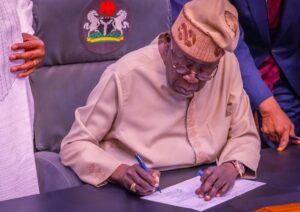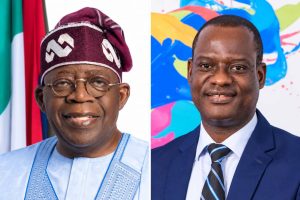
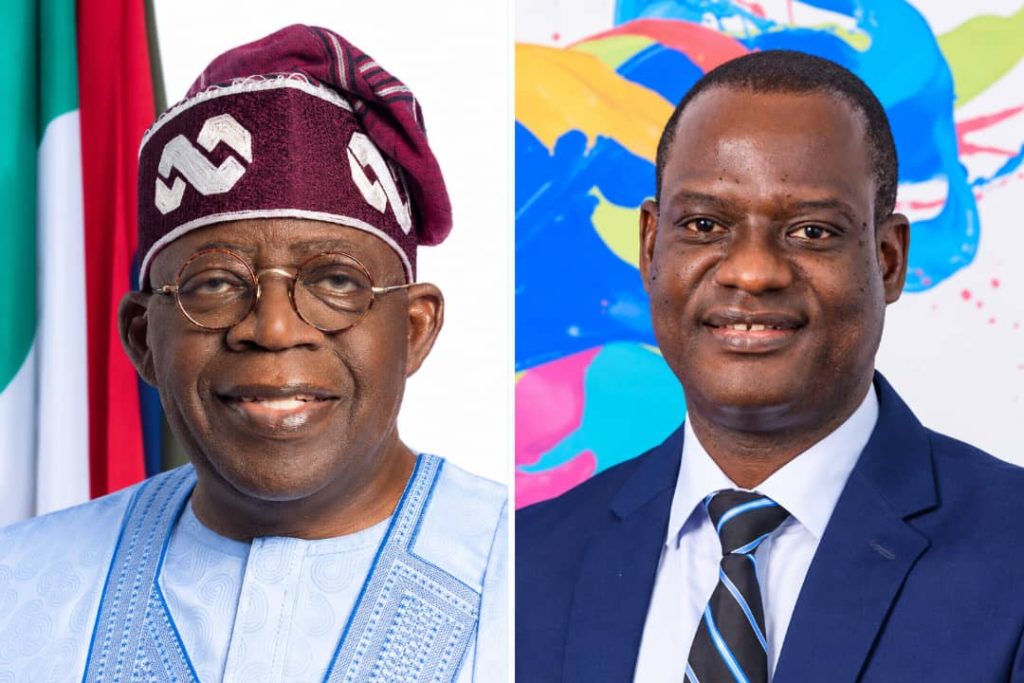
President Tinubu and Oyedele
But money obtained from lenders and repayable with interest remains borrowing, whatever it finances. A productive investment can justify a loan; it cannot erase the liability.
Finance Minister Taiwo Oyedele’s defence of President Tinubu proposed $21.7 billion external borrowing plan raises questions that cannot be answered by describing debt as investment.
The minister says: “This is investment, not borrowing.” But money obtained from lenders and repayable with interest remains borrowing, whatever it finances. A productive investment can justify a loan; it cannot erase the liability.
Nigerians deserve clear answers.
First, where is the complete project-by-project account? The reported plan covers 46 projects across 11 sectors. Publish their locations, individual costs, implementing agencies, contractors where selected, procurement records and completion schedules. Nigerians must be able to examine what each dollar will purchase.
Second, what is the full cost of the loans? Oyedele highlights a proposed $5 billion World Bank component at an average interest rate of about 2.1 per cent. However, the reported indicative average rate for the commercial component is 7.8 per cent. How much falls into each financing category? What are the fees, repayment periods, grace periods, guarantees and conditions? An attractive rate on one component does not explain the cost of the entire package.
Third, how will Nigeria repay the loans? Publish the annual repayment schedule and the revenue assumptions supporting it. What happens if oil earnings fall, the naira weakens or projects suffer delays? A road may generate economic benefits without producing the foreign currency needed to service its loan. Where will those dollars and euros come from?
Fourth, what proves that these projects offer value for money? About $10.6 billion is proposed for transportation, including the Lagos–Calabar and Sokoto–Badagry highways and the Kano–Kaduna rail project. Publish the feasibility studies, engineering designs, independently assessed costs and projected economic returns. What criteria placed these projects ahead of competing needs in electricity, agriculture, healthcare and education?
Fifth, how does this request relate to earlier approvals? Which projects already have budget allocations, approved loans or other financing commitments? What additional funding gap does this proposal address? Nigerians need a reconciliation that rules out overlapping provision and explains any cost increases.
Sixth, who ultimately carries the liability? The minister says the package includes financing for states, the FCT and agencies. That explanation must come with a borrower-by-borrower breakdown: who receives the funds, who repays, and what obligations fall on the Federal Government if a beneficiary defaults?
Finally, what safeguards govern implementation? Oyedele says the plan spans roughly five years and may not be drawn down in full. What conditions must each project satisfy before funds are released? Will Nigerians receive quarterly reports showing disbursements, expenditure, physical progress and independent audit findings?
The National Assembly must demand these documents and subject them to public scrutiny before approval.
Nigerians understand the need for infrastructure. They also understand that an inflated contract, an abandoned project or an unrealistic revenue forecast can leave them paying for promises that never materialise.
Let the projects be published. Let the terms be published. Let the repayment plan be published. Calling debt an investment does not answer who will pay, how much, or for how long.
By Paul Ibe, Media aide to Atiku Abubakar