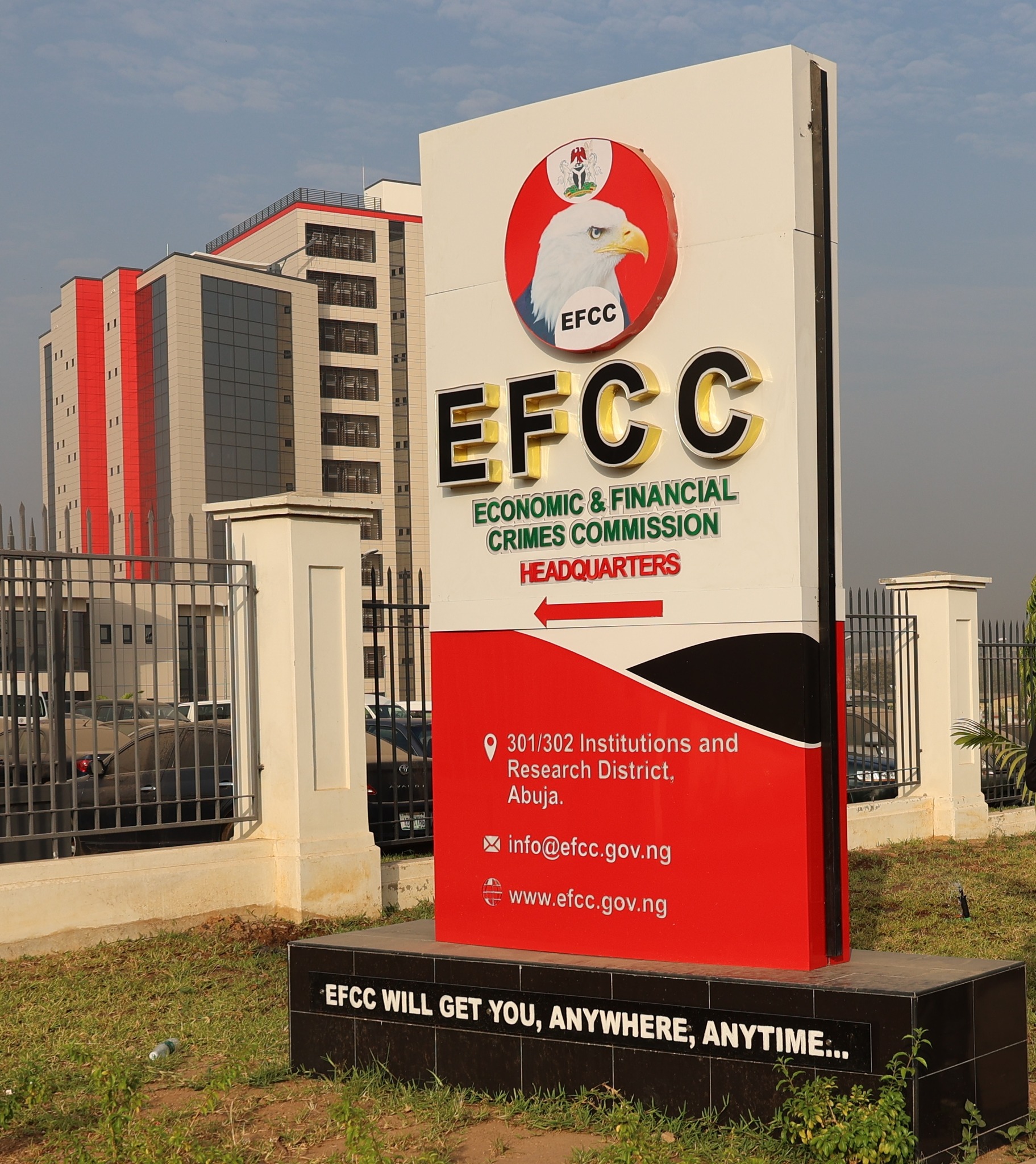
EFCC office
The Economic and Financial Crimes Commission (EFCC) and the United States Federal Bureau of Investigation (FBI) have reaffirmed their commitment to deepening operational synergy, intelligence sharing, and strategic collaboration to investigate the alleged diversion of funds provided under U.S. government-supported initiatives.
The joint resolve was declared on Thursday, September 10, 2026, during a courtesy visit to the Lagos Zonal Directorate 2 of the EFCC.
The FBI delegation was led by Macus Maccain, Assistant Law Enforcement Attaché, and received by ACE I Bawa Usman Kaltungo, Acting Zonal Director of the EFCC.
According to Maccain, the meeting aimed to strengthen existing ties to track potential financial irregularities in organizations funded by the United States Agency for International Development (USAID), particularly those involved in HIV and tuberculosis interventions.
He noted that the probe follows the U.S. government’s decision to shut down several USAID programs in 2025, which raised red flags regarding unspent or active funds remaining with implementing entities.
“We are seeking stronger engagement with the EFCC to establish how the funds were managed and identify possible financial misconduct arising from the termination of the programmes,” Maccain stated.
Adding to the delegation’s position, Jeremy Kennon, Special Agent with the U.S. Department of State Office of Inspector General, explained that joint agreements had previously funded organizations establishing one-stop treatment centers.
However, subsequent audits revealed inflated budgets and financial discrepancies across Kano State, other Nigerian states, and internationally.
Kennon emphasized the FBI’s goal of establishing a long-term, reciprocal information-sharing partnership with the EFCC to address the issue.
Responding on behalf of EFCC Chairman Ola Olukoyede, Kaltungo welcomed the delegation and highlighted the long-standing law enforcement relationship between Nigeria and the United States.
He pledged that the EFCC would conduct a nationwide, coordinated investigation to trace the movement of the USAID funds to their ultimate beneficiaries.
“Tracing the funds will enable investigators to establish how the money was spent, whether it was deployed for its intended purposes, or if any portion was mismanaged following the cancellation of the programmes,” Kaltungo assured.