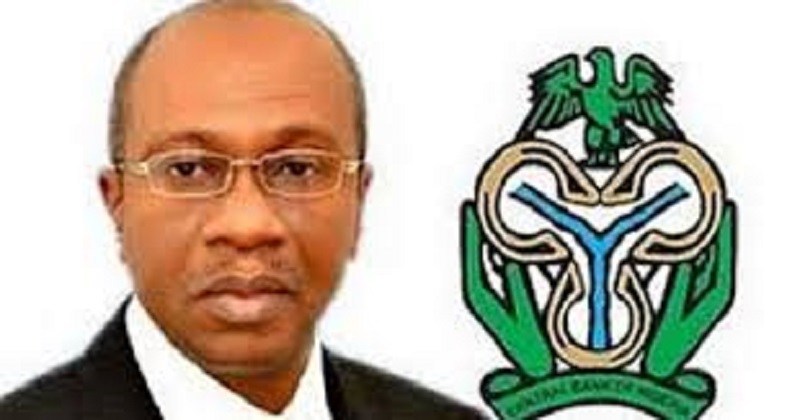
CBN Gov. Mr. Godwin Emefiele

The economy is the ‘oxygen’ of a people, and is basically about the allocation of scarce resources for production, distribution and consumption for the fulfillment of the needs of the people. A national economy is classified into four basic sectors, namely, the primary sector (raw materials), secondary sector(manufacturing and industry), tertiary sector(service) and quaternary sector(knowledge).
Economies grow when there is positive change in the production level of goods and services over a certain period of time. To achieve that, capital and other necessary resources will be channeled into the economy for production, and not for consumption. Key drivers of economic growth are, employment, consumer spending which leads to improvements in business conditions, business investments, innovations and start-ups, infrastructure and development of technology to increase efficiency and productivity.
Experts have noted that countries that worked in the field of technological development grow rapidly as compared to countries that have less focus of technological development. As noted by Brad Bradshaw, a leading expert in building high growth technology companies and founder, Institute of Innovation and Sustainability, there was need to increase efficiency and productivity throughout the entire economy by at least two per cent per year.
Exchange rate, which is the price of one currency relative to another, is one of the major indicators in an economy. It helps a nation’s economic health and the wellbeing of citizens. Imports and exports influence exchange rates, inflation, interest rate and GDP. An economy is healthy and balanced when imports and exports are growing.
Central banks play a pivotal role in the determination and management of the health of the economy by formulating and implementing monetary policy and directing money supply to achieve price stability. Central banks in developing countries perform wider roles in order to spur economic growth and development. They frame their monetary policy in a way that larger bank credit go to priority sectors such as agriculture, manufacturing and industry, small industries and export trades.
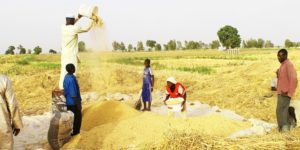
Accordingly, the Central Bank of Nigeria (CBN) has been making great efforts through various policy initiatives towards resuscitating agriculture, enable manufacturing and local production, engender diversification and rebalancing of the economy. The odds are there because of the trajectory and stubborn problems the economy had developed over the years after the discovery of oil and the advent of the Structural Adjustment Programme (SAP).
The economy had a good head start but lost its balance and transformed into a mono-product economy with the discovery of oil and the associated petrodollar. And with SAP it transformed into a heavily import-dependent economy, a development which progressively affected the exchange rate to negatively. The economy acquired other severe challenges including sabotage which made it to be resistant to guidance. The Nigerian economy could qualify as one of the most sabotaged in the world.
Some of the economic saboteurs whose unpatriotic acts have contributed in weakening the economy include the political class who indulge in conspicuous consumption at the expense of production and the State, indiscriminate importers who deplete scarce foreign reserve by importing virtually everything including very basic items that could readily be produced locally, smugglers and unscrupulous law enforcement who collude with them at the borders and other gateways. Others include opportunistic thieves and criminal syndicates at power centres, businessmen who make tremendous profits but do not pay commensurate taxes into the state treasury and so on and so on.
Nigeria is the most populous black nation on earth and with a great potential that needs to be potentiated for a maximum impact. The country operates a lower—middle-income and mixed economy which is ranked as the 27th largest in the world and the largest in Africa, followed by South Africa and Egypt. The three economies are said to account for half of the African economy.
Regardless of the stubborn challenges of the economy, it still tops the ten richest economies in Africa by Gross National Income which stand at US$514.05 billion ahead of Egypt (US$394.25 bn), South Africa (US$329.53 bn), Algeria (US$151.46) and others. Gross National Income is measured by total income obtained through goods and services and monetary inflow and outflows as part of international business activities. Against odds, Nigeria has the potential to emerge as a global super power in Africa, but it demands the rebalancing and repositioning of the economy from consumption to production.
That has been the vision and mission of the Central Bank of Nigeria. The apex bank under the present Governor has been making aggressive efforts on various fronts to boost local production and engender diversification. CBN has remained focused even in the face of scathing criticisms most of which are unwarranted and borne out of misunderstanding of the enormity and complexities of the challenges of the economy. But such is common with central banks.
Central banks are noted to be often misunderstood in their efforts to heal the economy. According to Kimberly Amadeo, the actions of central banks were often poorly understood by politicians and sometimes the general public. Regardless, the vision of CBN to rebalance the economy is realisable in the long run especially with a combination of innovative fiscal policies and political will.
Nwobu, a Chartered Stockbroker and Business Journalist wrote via arizenwobu@yahoo.com. Tel: 08033021230