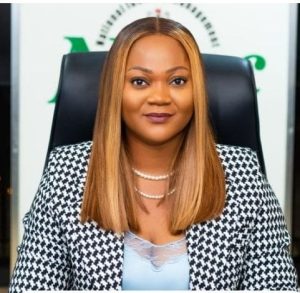

The Kwara State Office of the National Human Rights Commission (NHRC) recorded 122 cases of domestic violence between January and October 2026, the commission’s state coordinator, Mrs. Olajumoke Olaoye, revealed on Monday in Ilorin.
Speaking in an interview with the News Agency of Nigeria (NAN), Olaoye highlighted that while women constitute the majority of complainants, an increasing number of men are stepping forward to report abuse as awareness surrounding marital rights continues to grow across the state.
Multi-Dimensional Abuse and Stigma
Olaoye noted that the reported cases extend well beyond physical assault, encompassing emotional, sexual, and economic abuse, as well as the unlawful deprivation of a spouse’s property.
She observed that male victims often face significant hurdles when reporting abuse due to deep-seated societal expectations and the fear of stigmatization.
The coordinator also specifically identified spousal rape as a prevalent form of sexual violence, emphasizing that marriage and the payment of bride price do not negate the necessity of mutual consent. She expressed deep concern over the tendency of some families to conceal sexual violence and rape rather than pursue legal justice.
Addressing the underlying causes of domestic abuse, Olaoye pointed to cultural norms and misinterpretations of religious teachings that relegate women and pressure them to endure mistreatment in the name of submission.
“Our culture has relegated women to the background. Some people also interpret religious teachings to mean that women must endure abuse in the name of respecting their husbands,” Olaoye stated.
However, she noted that community outreach is yielding positive shifts: “Things are changing because we have been engaging religious leaders, traditional rulers, and other stakeholders to ensure that they support efforts to reduce domestic violence.”
The commission also received multiple cases involving the physical abuse of children, with Olaoye asserting that parental discipline must never be used as a cover to violate a child’s fundamental rights.
Legal Backing and Enforcement
Olaoye cited Chapter Four of the 1999 Constitution and the Violence Against Persons (Prohibition) Law 2020 (VAPP Law) as the primary legal frameworks safeguarding victims in Kwara.
She confirmed that implementation of the VAPP Law is progressing steadily, with the Kwara State Ministry of Justice actively invoking its penalty provisions—which include fines and imprisonment—to prosecute offenders, particularly in rape cases.
For complex cases beyond local administrative resolution, Olaoye explained that matters can be escalated to the NHRC Headquarters Governing Council, whose decisions carry the weight of High Court judgments. The commission also deploys pro bono legal counsel to pursue public interest litigation for vulnerable victims.
To ensure comprehensive support, the NHRC actively collaborates with the International Federation of Women Lawyers (FIDA), the Nigeria Police Force, the National Agency for the Prohibition of Trafficking in Persons (NAPTIP), and the Ministry of Women Affairs and Social Development.
Reporting Channels and Call to Action
Urging victims not to suffer in silence, Olaoye encouraged individuals to report abuse through physical office visits, phone calls, WhatsApp messages, or emails.
Provisions are also available for anonymous reporting or third-party submissions to protect individuals from intimidation or social stigma.
She called on families, community leaders, and religious authorities to actively dismantle covers of silence, support victims, and ensure perpetrators are held accountable under the law. (NAN)