Naira collapse

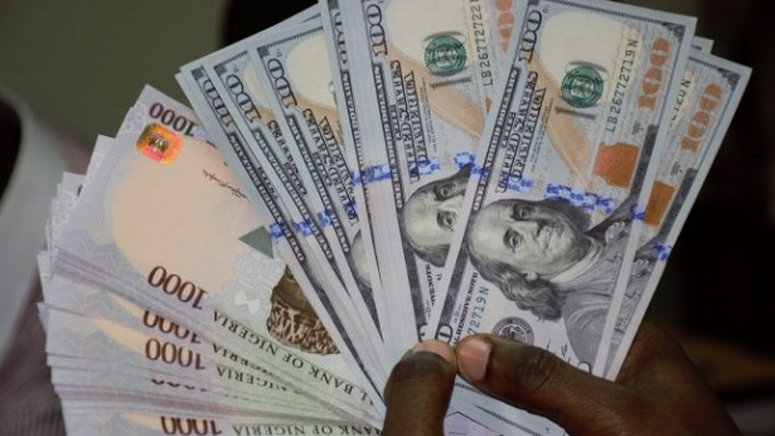
Crisis time is the time for creative thinking and solution evolution. There is a dollar crisis which has severely impacted the value of the Naira. But some economy watchers believe that the newly appointed Governor, Central Bank of Nigeria (CBN), Dr. Olayemi Cardoso and his team would make determined efforts and explore creative policy options to manage the dollar crisis and exchange rate volatility, and stabilize and strengthen the naira for the greater benefit of the economy and wellbeing of citizens.
The naira plunged steeply to an all-time low after the unification of exchange rates and adoption of a free floating exchange rate regime. The Minister of Finance, Mr Olawale Edun, in a press report, attributed the plunge of the naira to the approximately US$6.8 billion in overdue forward payment within the foreign exchange (FX) market. Mr. Edun believes that the naira would stabilize if the issue was addressed, and that it would also thereafter lead to further FX inflows.
According to the Director- General, West African Institute for Financial and Economic Management (WAIFEM), globalization has heightened the importance of exchange rates which necessitates skillful management. The choice of exchange rate adopted by nations is crucial. Former CBN Governor, Mr Godwin Emefiele, had noted that the exchange rate policy were to preserve the value of the domestic currency and maintain a favourable external reserves.
According to Emefiele, ‘’developing economies are more cautious towards protecting their economies from adverse movements of convertible currencies which they trade with and therefore avoid regimes that will expose them to speculative attacks and currency crisis and desire to promote long-term growth.’’
Ideally, it has been noted that the free floating exchange rate adopted by CBN eliminates the risk of exchange rate volatility, ensures economic stability and makes a country a more attractive investment destination. It also enhances monetary policy effectiveness and improves balance of payment among other advantages.
However, there are varying opinions on the suitability of the adopted free floating exchange rate vis-a- vis the fundamentals and challenges of the economy. The World Bank supports the policy and noted that it was necessary to restore macroeconomic stability. Also, the US Deputy Treasury Secretary, Mr Adewale ‘’Wally’’ Adeyemo who spoke recently at the Lagos Business School, noted that unifying Nigeria’s exchange rate would create the kind of macroeconomic stability that was essential to attracting foreign investment.
But, a former CBN Deputy Governor, Dr Tunde Lemo suggested that CBN should abandon the merger of exchange rates. ‘’I advise that policy makers should jettison merging the two rates because naira is not an internationally convertible currency.’’ Aligning with Dr Lemo, Dr Buba Musa noted that non-convertibility of currencies pose challenges to FX management.
Other experts have also noted that the free floating exchange rate may not be suitable for a country that is facing economic challenges such as high unemployment, high inflation, low GDP, because the country may not be able to recover if the currency continues to depreciate.
It was suggested that a managed float regime, which is neither entirely floating nor fixed would allow a nation’s central bank to intervene regularly in a FX market in order to determine the direction of the currency float and/or reduce the amount of currency volatility.
Former CBN Governor, Emefiele had noted that CBN’s choice of exchange rate regime ‘’had at all times been determined by the prevailing economic fundamentals and it was not uncommon that the dynamics of the external and domestic economy lead to a change in regime.’’
He further noted that a floating exchange rate regime was more suitable for advanced economies because majority of them have convertible currencies which are less exposed to the vagaries of currency fluctuation.
The FX challenge has been recurrent over the years because of the fundamentals and other associated aberrations in the economy, and until the problems are holistically addressed, the challenge will continue to disrupt the economy and exacerbate hardship for citizens.
There is a high demand pressure on the dollar against inadequate supply and CBN had at various times initiated different policy options to stimulate FX inflows through non-oil sources, and manage demand for FX.
Recently, the Bank directed Payment Switching and Processing Companies to halt local transfer of remittances from the diaspora received through International Money Transfer Operators (IMTO). It also threatened to close down any Bureau de Change that does not operate electronically, because they diverted the FX they get to the black market.
Nwobu, a Chartered Stockbroker and Policy Analyst wrote via arizenwobu@yahoo.com
Tel: 08033021230