Skip to content
July 21, 2026
  • Home
  • About us
  • Contact us
  • Newsletter
  • Privacy Policy
Political Economist

Political Economist

A liberal News reporting Politics, Sports, Business, Commentaries

  • Home
  • National News
    • Metro News
      • metro
    • Society
    • Crime and Justice
  • Special Reports
    • Investigation
    • Features
    • Interviews
  • Opinion
    • Commentaries
    • Perspectives
  • Press Releases
  • International News
  • Business & Economy
  • Politics
Watch Online
  • Home
  • Business & Economy
  • Dengue fever will ‘take off’ in southern Europe, US, Africa this decade, WHO scientist says
  • Business & Economy

Dengue fever will ‘take off’ in southern Europe, US, Africa this decade, WHO scientist says

Admin October 6, 2023

October 6, 2023

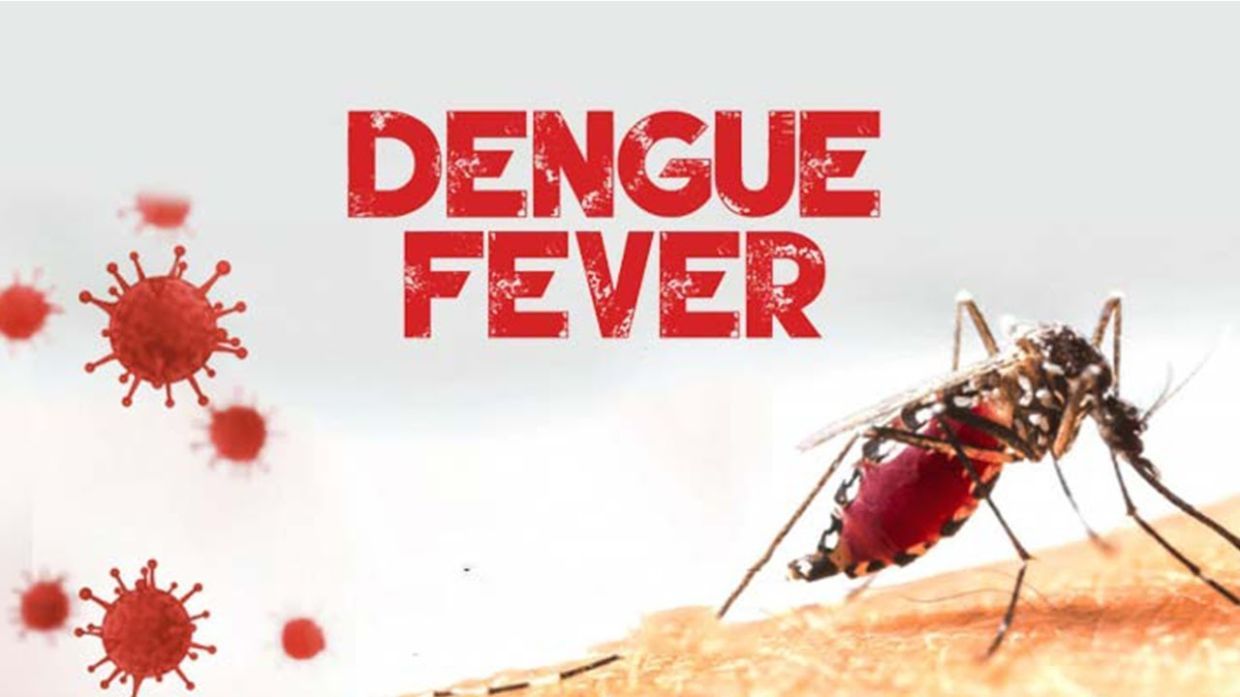
Dengue fever will become a major threat in the southern United States, southern Europe and new parts of Africa this decade, the WHO’s chief scientist said, as warmer temperatures create the conditions for the mosquitoes carrying the infection to spread.

The illness has long been a scourge in much of Asia and Latin America, causing an estimated 20,000 deaths each year. Rates of the disease have already risen eight-fold globally since 2000, driven largely by climate change as well as the increased movement of people and urbanization.

Many cases go unrecorded, but in 2022 4.2 million cases were reported worldwide and public health officials have warned that near-record levels of transmission are expected this year. Bangladesh is currently experiencing its worst-ever outbreak, with more than 1,000 deaths.

“We need to talk much more proactively about dengue,” Jeremy Farrar, an infectious diseases specialist who joined the World Health Organisation in May this year, told Reuters.

“We need to really prepare countries for how they will deal with the additional pressure that will come… in the future in many, many big cities.”

Farrar previously spent 18 years working in Vietnam on tropical diseases including dengue. He later headed up the Wellcome Trust global health charity and advised the UK government on its COVID-19 response before joining the WHO in May this year.

Farrar said the infection is likely to “take off” and become endemic in parts of the United States, Europe and Africa – all regions where there has already been some limited local transmission – as global warming makes new areas hospitable to the mosquitoes that spread it. That will put acute pressure on hospital systems in many countries, he warned.

“The clinical care is really intensive, it requires a high ratio of nurses to patients,” he said. “I really worry when this becomes a big issue in sub-Saharan Africa.”

Most people who get dengue do not have symptoms, meaning case rates are thought to be far higher than the reported numbers. Those who do can experience fever, muscle spasms and joint pain so severe it is known as “break-bone fever.” In severe cases – less than 1% – it can be fatal.

There is no specific treatment for dengue, although there is a vaccine available. Earlier this week, the WHO recommended Takeda Pharmaceuticals’ (4502.T) Qdenga vaccine for children aged 6 to 16 in areas where the infection is a significant public health problem.

Qdenga is also approved by the EU regulator, but Takeda withdrew its application in the United States earlier this year, citing data collection issues. Takeda said it was still in talks with the U.S. Food and Drug Administration about the vaccine.

Preparing new regions of the world to deal with dengue means ensuring that any public health funds get spent in the right areas, Farrar said, including on the best way to control the mosquito.

Dengue is spread by infected Aedes aegypti mosquitoes, which behave differently to the malaria-carrying kind. For example, they bite people indoors, and they bite all day rather than overnight. They also breed in very shallow water.

Farrar said proper prevention would include triaging plans for hospitals as well as scientific innovation alongside other key factors, such as urban planning, to avoid areas of standing water near or in houses.

“We need to combine different sectors that are not used to working together,” he said.

REUTERS
  • Facebook
  • Share on X
  • LinkedIn
  • WhatsApp
  • Email
  • Copy Link
Tags: Jeremy Farrar Wellcome Trust global health WHO

Post navigation

Previous ‘AFRICAN FILM CITY PROJECT IN EPE TO EXPAND NOLLYWOOD GROWTH’ — SANWO-OLU
Next GOCOP confab’23: Uwaleke plots roadmap for naira recovery, urges moving surplus to Infrastructure Fund

Related Stories

West Africa’s ECOWAS bloc signs agreement backing Nigeria-Morocco atlantic gas pipeline, statement reports regional heads
  • Business & Economy

West Africa’s ECOWAS bloc signs agreement backing Nigeria-Morocco atlantic gas pipeline, statement reports

July 20, 2026
NLNG honours Professor Barth Nnaji for his contribution to science and innovation
  • Business & Economy

NLNG honours Professor Barth Nnaji for his contribution to science and innovation

July 20, 2026
IPMAN to FG: Stop issuing licences for petroleum products import Fuel crisis
  • Business & Economy

IPMAN to FG: Stop issuing licences for petroleum products import

July 20, 2026
logo

Political Economist is a liberal news magazine with global affiliations.

At Political Economist, we promote free enterprise and act as a catalyst for the growth of knowledge economy. We are proudly pan-Nigeria yet richly spiced with African and global news. We offer a fair and balanced news reportage presented by our team of well-heeled professional journalists. <

About us

  • 5 Olutosin Ajayi Street, By CPM Church, Ajao Estate, Lagos State, Nigeria
  • +234 805 680 1124
  • info@politicaleconomistng.com

Follow

Subscribe to notifications

You may have missed

Olisa Agbakoba to chair GOCOP 2026 conference in Lagos
  • National News

Olisa Agbakoba to chair GOCOP 2026 conference in Lagos

July 20, 2026
Court sentences 2 Ansaru commanders to life imprisonment Federal High Court
  • National News

Court sentences 2 Ansaru commanders to life imprisonment

July 20, 2026
Nigeria’s Erebor elected ATU confab preparatory committee chair
  • International News

Nigeria’s Erebor elected ATU confab preparatory committee chair

July 20, 2026
Reps Committee commences consideration of revised State Police establishment bill spokesman
  • National News

Reps Committee commences consideration of revised State Police establishment bill

July 20, 2026
  • Home
  • About us
  • Contact us
  • Newsletter
  • Privacy Policy
Copyright © All rights reserved. | DarkNews by AF themes.