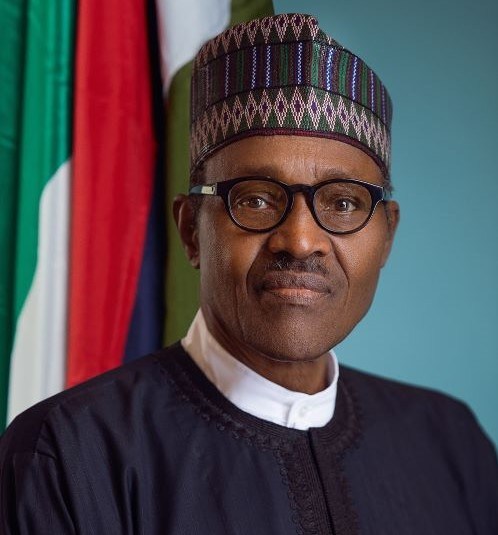
Muhammadu Buhari
July 16, 2025
The passing of former President Muhammadu Buhari marks the end of a significant chapter in Nigeria’s history.
He was one of the few Nigerians to lead the country both as a military Head of State (1983–1985) and as a democratically elected President (2015–2023).
Immediate Legal Consequences Upon Death
When a former president dies, the law triggers several immediate legal obligations. Firstly, the National Flag must be flown at half-mast for three days as a sign of national mourning at all federal government buildings, naval vessels, and Nigerian embassies worldwide.
The failure to comply with this provision could constitute a breach of statutory duty.
The Legal Implications
While tributes and political reflections have filled the airwaves, this moment raises an important but often overlooked question – ‘what are the legal implications’?
Well, it all starts with a law known as the Remuneration of Former Presidents and Heads of State (and other Ancillary Matters) Act.
The Act provides financial entitlements and state-sponsored privileges for all former Presidents, Heads of State, Vice-Presidents, and Chiefs of General Staff of the Federal Republic of Nigeria.
While, he was alive, the former President, like all former Heads of State, was legally entitled to:
Personal staff: An administrative officer and a personal secretary
Security detail: Up to four armed police officers and one SSS aide-de-camp (attached for life)
Vehicles: Three government-provided cars, replaced every four years
Diplomatic protocol: A lifetime diplomatic passport, and third in official national order of precedence (after the sitting President and Vice President)
Healthcare: Free medical treatment in Nigeria and abroad for himself and his immediate family
Vacation: 30 days paid vacation annually, within or outside Nigeria
Accommodation: A furnished five-bedroom residence anywhere in Nigeria, and a fully equipped office in a location of his choosing.
₦350,000 monthly upkeep allowance
These entitlements are legally backed and included in the federal budget annually.
What Changes After His Death?
Financial Obligations Shift to Family Members
Perhaps the most significant legal change occurs in the realm of financial entitlements.
While living former presidents receive N350,000 monthly as upkeep allowance, their death creates a legal entitlement for family members to receive N1,000,000 annually, paid quarterly at N250,000 per quarter.
This provision raises several critical legal questions. The Act specifies that these funds are “for the upkeep of the spouse and education of the children of deceased former Heads of State and deceased former Vice-Presidents up to the university level.” This creates enforceable legal rights for family members and corresponding duties for the federal government.
Estate Planning and Succession Implications
The Act’s provisions significantly impact estate planning for former presidents. Unlike typical pension schemes where benefits might form part of an estate, the family allowances under this Act are personal entitlements that cannot be bequeathed or transferred.
This creates a unique legal category of benefits that exist independently of estate law.
The requirement that funds be used for “upkeep of the spouse and education of the children” creates a form of legal trust arrangement, though the Act doesn’t specify enforcement mechanisms. Who monitors compliance?
Can the government demand accounting? These questions remain legally unresolved.
The Remarriage Clause
One of the most controversial aspects of the law is Section 2(3), which terminates the spouse’s entitlement if she remarries. The gendered language (“if she re-marries”) immediately raises constitutional concerns about gender equality and discrimination.
This provision could face legal challenges under Section 42 of the 1999 Constitution, which prohibits discrimination based on sex.
The remarriage clause also creates practical legal complications. What constitutes “remarriage” under the Act? Does it include customary marriages, religious ceremonies, or only statutory marriages? The law’s silence on these definitions could lead to litigation and interpretive challenges.
Perquisites That Survive Death
Interestingly, certain perquisites appear to survive the former president’s death, though the Act’s language is ambiguous. The diplomatic passport “for life” obviously ends with death, but what happens to the furnished accommodation, vehicles, and other benefits?
The Act doesn’t explicitly address whether spouses retain access to these perquisites.
The provision of medical treatment “for former Heads of State and their immediate family” raises questions about whether family members retain these benefits after the former president’s death. The Act’s silence on this matter could lead to disputes between families and the government.
Conclusion
The death of a former president in Nigeria activates a complex web of legal obligations and entitlements under the Act. While the law provides important protections for families, its gaps and ambiguities create potential for litigation and administrative confusion.
As Nigeria’s democracy matures, reforming this legislation to provide clearer, more equitable, and enforceable provisions will be essential for protecting both the dignity of former leaders and the rights of their families.
Key recommendations include gender-neutral language, clearer definitions of family members and remarriage, explicit enforcement mechanisms, and procedural guidelines for claiming benefits.
The current legal framework represents an important step in recognizing the continued service obligations to former leaders, but its implementation challenges highlight the need for more comprehensive legislative attention to these critical issues.
Courtesy: lawpadi