Skip to content
August 21, 2026
  • Home
  • About us
  • Contact us
  • Newsletter
  • Privacy Policy
Political Economist

Political Economist

A liberal News reporting Politics, Sports, Business, Commentaries

  • Home
  • National News
    • Metro News
      • metro
    • Society
    • Crime and Justice
  • Special Reports
    • Investigation
    • Features
    • Interviews
  • Opinion
    • Commentaries
    • Perspectives
  • Press Releases
  • International News
  • Business & Economy
  • Politics
Watch Online
  • Home
  • International News
  • COVID-19: Over 1.1m infections, 25,000 deaths in Africa – WHO
  • International News

COVID-19: Over 1.1m infections, 25,000 deaths in Africa – WHO

Admin August 19, 2020
ebola

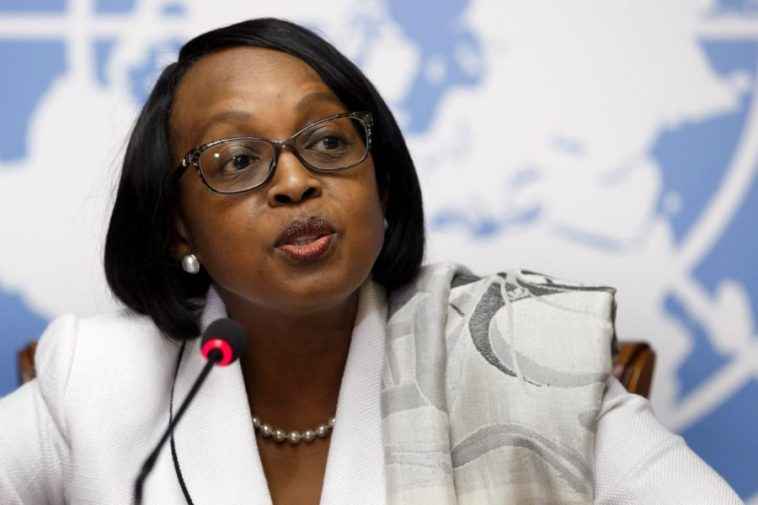
Matshidiso Moeti, WHO Africa Regional Director

The World Health Organisation (WHO) Regional Office for Africa  in Brazzaville, Congo, says there are over 25,000  COVID-19 deaths on the African continent.

The UN health agency gave the update on its regional official Twitter account @WHOAFRO.

WHO stated on its dashboard that “there are over 1.1 million confirmed COVID-19 cases on the African continent – with more than 846,000 recoveries and more than 25,000 deaths cumulatively.”

It stated that South Africa had 589,886 cases and 11,982 deaths, followed by Nigeria with 49,485 confirmed cases and 977 deaths, while Ghana had 42,653 confirmed cases and 239 deaths.

It added that Seychelles, Eritrea and Mauritius were countries currently with the lowest confirmed cases in the region.

The office said Seychelles had 127 confirmed cases with zero death, Eritrea; 285 confirmed cases with zero death, Mauritius had 346 reported cases with 10 deaths.

In another statement on its website, WHO stated that August 14 marked six months of  Africa’ first COVID-19.

It stated that while the virus had raced through many other regions of the world, the pandemic’s evolution on the African continent had been different.

“Preliminary analysis by WHO finds that an exponential surge in cases which peak about two to three weeks later is not occurring in Africa.

“Instead, many countries are experiencing a gradual rise in COVID-19 cases and it is difficult to discern a specific peak. Transmission patterns also differ between countries, but more importantly within countries.

“At the onset, COVID-19 mainly affected capital cities. However, the virus is now moving from high-density urban areas to informal settlements and then onward to rural areas that have a lower population density.”

The statement quoted Dr Matshidiso Moeti, WHO Regional Director for Africa, as saying: “in Africa, curbing COVID-19 is a marathon and not a sprint.

WHO
“We are observing multiple local outbreaks each with their own infection patterns and peaks. It is by bolstering the response at the community level that we will win this race.

“The COVID-19 response must be integrated into the fabric of every health district.”

The statement further quoted Moeti, as saying: “Not only must we keep up with the evolving trends, we must also anticipate, predict and act faster to head off potentially disastrous outcomes.

“Areas of high transmission, as well as localities with relatively fewer infections both, deserve attention. In short, we must be strong on all fronts,” it said. (NAN)

  • Facebook
  • Share on X
  • LinkedIn
  • WhatsApp
  • Email
  • Copy Link
Tags: Matshidiso Moeti WHO

Post navigation

Previous It’ll be sad if the rich are given priority for the COVID-19 vaccine – Pope
Next Mali soldiers promise elections, stability within ‘reasonable time’

Related Stories

Charity boat rescues 50 migrants off Libya, seven found dead federal government
  • International News

Charity boat rescues 50 migrants off Libya, seven found dead

August 17, 2026
32m West Africans risk displacement, $294bn needed to tackle climate crisis — ECOWAS regional heads
  • International News

32m West Africans risk displacement, $294bn needed to tackle climate crisis — ECOWAS

August 12, 2026
Global 2026 oil supply shortfall to deepen as Hormuz reopening remains elusive – IEA says IEA
  • International News

Global 2026 oil supply shortfall to deepen as Hormuz reopening remains elusive – IEA says

August 12, 2026
logo

Political Economist is a liberal news magazine with global affiliations.

At Political Economist, we promote free enterprise and act as a catalyst for the growth of knowledge economy. We are proudly pan-Nigeria yet richly spiced with African and global news. We offer a fair and balanced news reportage presented by our team of well-heeled professional journalists. <

About us

  • 5 Olutosin Ajayi Street, By CPM Church, Ajao Estate, Lagos State, Nigeria
  • +234 805 680 1124
  • info@politicaleconomistng.com

Follow

Subscribe to notifications

You may have missed

Oluyede PDP guber candidate in Ekiti pledges support for Tinubu’s re-election
  • National News

Oluyede PDP guber candidate in Ekiti pledges support for Tinubu’s re-election

August 21, 2026
Aiyedatiwa appoints commissioner, 3 advisers, 1,000 aides
  • National News

Aiyedatiwa appoints commissioner, 3 advisers, 1,000 aides

August 20, 2026
12 ships laden with petroleum products, various commodities arrive Lagos ports greater efficiency
  • Business & Economy

12 ships laden with petroleum products, various commodities arrive Lagos ports

August 20, 2026
Africa Risks Becoming Mere AI Consumer Without Trusted Ecosystems – Microsoft Warns Microsoft
  • Business & Economy

Africa Risks Becoming Mere AI Consumer Without Trusted Ecosystems – Microsoft Warns

August 20, 2026
  • Home
  • About us
  • Contact us
  • Newsletter
  • Privacy Policy
Copyright © All rights reserved. | DarkNews by AF themes.