October 20, 2023
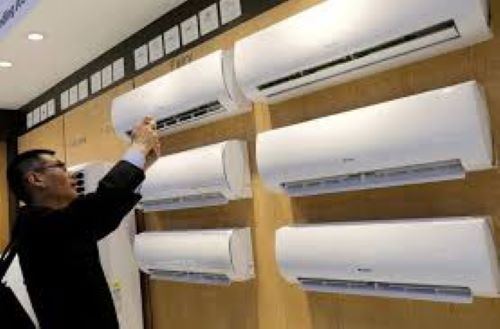
With climate warming leading to more air conditioning use worldwide, dozens of countries including China, India and the United States are being asked to commit to a global pledge that would require at least a 68% reduction in cooling-related emissions by 2050, sources told Reuters.
The Global Cooling Pledge – set to be announced at the upcoming United Nations climate summit, COP28 – represents a tough request given the cooling industry is only expected to grow.
The emissions from both the refrigerants and the energy used in cooling now account for about 7% of global greenhouse gas emissions, and are expected to triple by 2050 as temperatures continue to rise.
There will be about 3 billion more air conditioners installed around the world beyond the roughly 2 billion currently in place, said Noah Horowitz, program director of the Clean Cooling Collaborative nonprofit. “We cannot just have business as usual.”
The COP28 Presidency held by the United Arab Emirates is leading the pledge alongside the U.N. Environment Programme’s (UNEP) Cool Coalition.
With the global temperature now 1.2 degrees Celsius warmer on average than during the preindustrial era, the world is seeing more intense heatwaves. At 1.5C of warming, hundreds of millions of people could face one week per year of deadly humid heat that would be unsurvivable without access to cooling.
Achieving the pledge’s commitments will require major investment in the rollout of more sustainable cooling technology, aided by government incentives and bulk procurement, experts said.
It also would likely need electric grids to switch to renewables, as today’s use of AC and fans to keep cool accounts for nearly 20% of global electricity consumption, according to the International Energy Agency.
“We need cooling, but it has to become more efficient,” UNEP Cool Coalition global coordinator Lily Riahi said.
The pledge, which would mark the world’s first collective focus on energy emissions from the cooling sector, calls for countries to reduce their cooling-related emissions by at least 68% compared with the 2022 baseline by 2050, according to the negotiated text of the pledge seen by Reuters. This would include tackling hydrofluorocarbons (HFCs) used in refrigerants, but also electricity consumption.
The pledge adds to efforts started under the 2016 Kigali Amendment to the Montreal Protocol, which calls for a gradual reduction in the production and consumption of HFCs — one of the most potent greenhouse gases — in cooling technologies.
Another 13 commitments outlined in the draft pledge include establishing minimum energy performance standards for air conditioning by 2030, and including cooling emissions in countries’ overall climate action plans, called Nationally Determined Contributions.
Signatories would also need to publish their own national cooling action plans by 2026, and to commit to supporting the deployment of highly efficient air conditioning technologies.
It is not yet clear which of the 40 or more countries so far consulted on the pledge might join the pact at the two-week COP28 summit starting Nov. 30 in Dubai.
The UNEP estimates that global efforts to tackle cooling emissions could have a significant impact by 2050, avoiding the release of up to 86 billion metric tonnes of carbon dioxide equivalent. By comparison, energy-related CO2 emissions come to around 37 billion metric tonnes annually.
REUTERS