
Skip to content
September 22, 2026
  • Home
  • About us
  • Contact us
  • Newsletter
  • Privacy Policy
Political Economist

Political Economist

A liberal News reporting Politics, Sports, Business, Commentaries

  • Home
  • National News
    • Metro News
      • metro
    • Society
    • Crime and Justice
  • Special Reports
    • Investigation
    • Features
    • Interviews
  • Opinion
    • Commentaries
    • Perspectives
  • Press Releases
  • International News
  • Business & Economy
  • Politics
Watch Online
  • Home
  • Breaking News
  • Coronavirus can persist in the air for hours, on surfaces for days – Study
  • Breaking News
  • International News

Coronavirus can persist in the air for hours, on surfaces for days – Study

Admin March 20, 2020
Korea

COVID-19

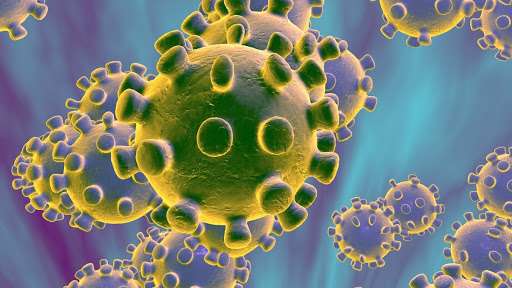
The highly contagious novel coronavirus that has exploded into a global pandemic can remain viable and infectious in droplets in the air for hours and on surfaces up to days, according to a new study that should offer guidance to help people avoid contracting the respiratory illness called COVID-19.

Scientists from the National Institute of Allergy and Infectious Diseases (NIAID), part of the U.S. National Institutes of Health, attempted to mimic the virus deposited from an infected person onto everyday surfaces in a household or hospital setting, such as through coughing or touching objects.

They used a device to dispense an aerosol that duplicated the microscopic droplets created in a cough or a sneeze.

The scientists then investigated how long the virus remained infectious on these surfaces, according to the study that appeared online in the New England Journal of Medicine on Tuesday – a day in which U.S. COVID-19 cases surged past 5,200 and deaths approached 100.

The tests show that when the virus is carried by the droplets released when someone coughs or sneezes, it remains viable, or able to still infect people, in aerosols for at least three hours.

On plastic and stainless steel, viable virus could be detected after three days. On cardboard, the virus was not viable after 24 hours. On copper, it took 4 hours for the virus to become inactivated.

In terms of half-life, the research team found that it takes about 66 minutes for half the virus particles to lose function if they are in an aerosol droplet.

That means that after another hour and six minutes, three quarters of the virus particles will be essentially inactivated but 25% will still be viable.

The amount of viable virus at the end of the third hour will be down to 12.5%, according to the research led by Neeltje van Doremalen of the NIAID’s Montana facility at Rocky Mountain Laboratories.

On stainless steel, it takes 5 hours 38 minutes for half of the virus particles to become inactive. On plastic, the half-life is 6 hours 49 minutes, researchers found.

On cardboard, the half-life was about three and a half hours, but the researchers said there was a lot of variability in those results “so we advise caution” interpreting that number.

The shortest survival time was on copper, where half the virus became inactivated within 46 minutes.

REUTERS

  • Facebook
  • Share on X
  • LinkedIn
  • WhatsApp
  • Email
  • Copy Link
Tags: NIAID

Post navigation

Previous Air Canada to lay off over 5,000 employees due to coronavirus pandemic – Union
Next WHO plans to declare DRC Ebola free says there’s still risk of re-emergence

Related Stories

Ugandan Shilling, Cedi and Kwacha Expected to Face Pressure; Nigeria and Kenya Currencies Stable
  • International News

Ugandan Shilling, Cedi and Kwacha Expected to Face Pressure; Nigeria and Kenya Currencies Stable

September 17, 2026
Oil slips as Saudi Arabia offers more crude via Oman; diesel near record high reserves crude oil
  • Business & Economy
  • International News

Oil slips as Saudi Arabia offers more crude via Oman; diesel near record high

September 16, 2026
Trump ⁠⁠⁠⁠⁠promises $5,000 to every U.S. adult if Republicans win midterm elections
  • International News

Trump ⁠⁠⁠⁠⁠promises $5,000 to every U.S. adult if Republicans win midterm elections

September 10, 2026
logo

Political Economist is a liberal news magazine with global affiliations.

At Political Economist, we promote free enterprise and act as a catalyst for the growth of knowledge economy. We are proudly pan-Nigeria yet richly spiced with African and global news. We offer a fair and balanced news reportage presented by our team of well-heeled professional journalists. <

About us

  • 5 Olutosin Ajayi Street, By CPM Church, Ajao Estate, Lagos State, Nigeria
  • +234 805 680 1124
  • info@politicaleconomistng.com

Follow

Subscribe to notifications

You may have missed

Nigeria will not be a soft target for predatory litigation, arbitration -Fagbemi
  • National News

Nigeria will not be a soft target for predatory litigation, arbitration -Fagbemi

September 22, 2026
PWDs demand inclusion in oil-host community benefits in Bayelsa Gov. Duoye Diri,
  • National News

PWDs demand inclusion in oil-host community benefits in Bayelsa

September 22, 2026
WHEN PRIVACY BECOMES CONTENT: The Dangerous Normalisation of Leaked Private Conversations, By Ken Harries
  • Commentaries

WHEN PRIVACY BECOMES CONTENT: The Dangerous Normalisation of Leaked Private Conversations, By Ken Harries

September 22, 2026
Adamawa 2027: Haske Picks Safriel Glah as Running Mate, Unveils Strong APM Ticket
  • Politics

Adamawa 2027: Haske Picks Safriel Glah as Running Mate, Unveils Strong APM Ticket

September 22, 2026
  • Home
  • About us
  • Contact us
  • Newsletter
  • Privacy Policy
Copyright © All rights reserved. | DarkNews by AF themes.