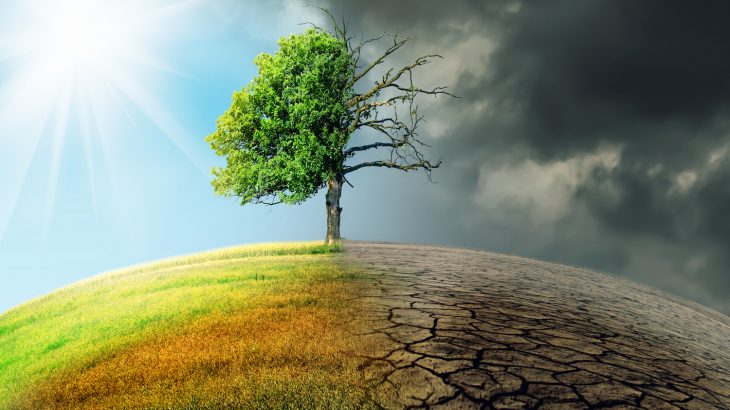
Rich and poor countries are at loggerheads over how to share benefits from genetic plant data that could help breed crops better able to withstand climate change, as negotiations to revise a global treaty are set to resume in Rome on Monday.
The little-known agreement is seen as crucial for agricultural research and development on a planet suffering rising hunger, malnutrition and the impacts of climate change.
“We need all the ‘genetics’ around the world to be able to breed crops that will adapt to global warming,” said Sylvain Aubry, a plant biologist who advises the Swiss government.
Rising temperatures, water shortages and creeping deserts could reduce both the quantity and quality of food production, including staple crops such as wheat and rice, scientists have warned.
The debate over “digital sequence information” (DSI) has erupted as the cost of sequencing genomes falls, boosting the availability of genetic plant data, Aubry said.
“A lot of modern crop breeding relies on these data today,” he added.
At the same time, the capability of machines to process vast amounts of that data to identify special crop traits such as disease resistance or heat tolerance has grown.
Pierre du Plessis, an African technical advisor on treaty issues, said companies and breeders can use DSI to identify the genetic sequence of a desired plant trait and send it by e-mail to a gene foundry that prints and mails back a strand of DNA.
“Then you use gene-editing technology to incorporate that strand into a plant. So you have created a new variety without accessing the trait in biological form,” he said.
That process could enable businesses to circumvent the International Treaty on Plant Genetic Resources for Food and Agriculture which stipulates that the benefits derived from using material from species it covers – including money and new technology – must be shared.
Developing states, which are home to many plant species such as maize and legumes used in breeding, hope to add digital sequence information to the treaty’s scope.
This would force companies and breeders that develop new commercial crops from that data to pay a percentage of their sales or profits into a fund now managed by the United Nations’ Food and Agriculture Organization (FAO).
The fund’s resources are used to conserve and develop plant genetic resources – the basis of the foods humans eat – so that farmers, particularly in the developing world, can cope better with a warming climate.
Most wealthy nations, which are generally more active in seed production, argue digital information on plant genetics should be available to use without an obligation to share benefits.
“There’s almost no one still doing the old-fashioned, ‘let’s try it and see’ breeding. It’s all based on the understanding of genome and a lot of CRISPR gene editing creeping in,” said du Plessis.
CRISPR is a technology that allows genome editing in plant and animal cells. Scientists say it could lead to cures for diseases driven by genetic mutations or abnormalities, and help create crops resilient to climate extremes.
But developing nations and civil society groups such as the Malaysia-based Third World Network say companies that develop new crop varieties using this information could lock access to their critical traits using intellectual property rights.
SCIENCE FICTION?
The treaty row emerged in late October when representatives of governments, the seed industry, research organisations and civil society attended a meeting at FAO headquarters in Rome.
Negotiations have been going on for more than six years to update the treaty, which came into force in 2004 and governs access to 64 crops and forage plants judged as key to feeding the world.
Last month, the United States, Canada, Australia, Japan and Germany rejected a proposal from the co-chairs of the talks to include “information, including genetic sequence data” in the treaty’s provisions on benefit-sharing.
Africa, India, Latin America and the Caribbean pushed back but the meeting ended without a compromise, which negotiators now hope to secure before the treaty’s governing body meets on Nov. 11.
The International Seed Federation, a body representing the $42-billion seed industry, says plant breeding still requires the use of physical material and it is too early to set the rules on genetic data.
“Developing policy based on speculation and on things that are bordering on scientific fiction doesn’t seem wise,” said Thomas Nickson, who attended the Rome talks for the federation.
“It is critical to have the information publicly available, especially for small companies in developing countries,” he added.
But Edward Hammond, an advisor to Third World Network, said small farmers needed support, and open access to plant data should not mean a “no-strings-attached free-for-all”.
“Resilience to climate change is being grown in the fields,” he said. “Interesting and new varieties are appearing in the fields as they adapt. This is not coming from companies using new seeds.”
Kent Nnadozie, secretary of the treaty, said if it were agreed the genetic data should be freely available, it would be mostly developed countries that had the capacity, resources and technology to put it to use.
“The fear is that (this) perpetuates and reinforces an unfair system or… amplifies it,” he said.
Concerns over increasing privatization and monopolization of food crops – which experts say threaten agricultural biodiversity – played a role in the treaty’s origins.
Its aim was to build a multilateral approach to access and exchange plant resources, with “fair and equitable sharing of the benefits arising from their use” as a means to address historical imbalances between farmers and seed companies.
While breeders and seed firms rarely pay for the knowledge and genetic resources they source from farmers and indigenous peoples, farmers usually have to buy the seeds of the improved crop varieties businesses produce and sell.
So far, more than 5.4 million samples of plant genetic resources have been transferred under the treaty between governments, research institutes and the private sector in 181 countries, its secretariat said.
A large majority of those transfers are improved materials from CGIAR, the global agricultural research network, to public-sector research organizations in developing countries tackling food security issues, said Michael Halewood, head of policy at Bioversity International, a CGIAR center.
“Countries around the world have always been interdependent on crop genetic resources. Climate change is making us all more interdependent than ever on those resources,” he said.