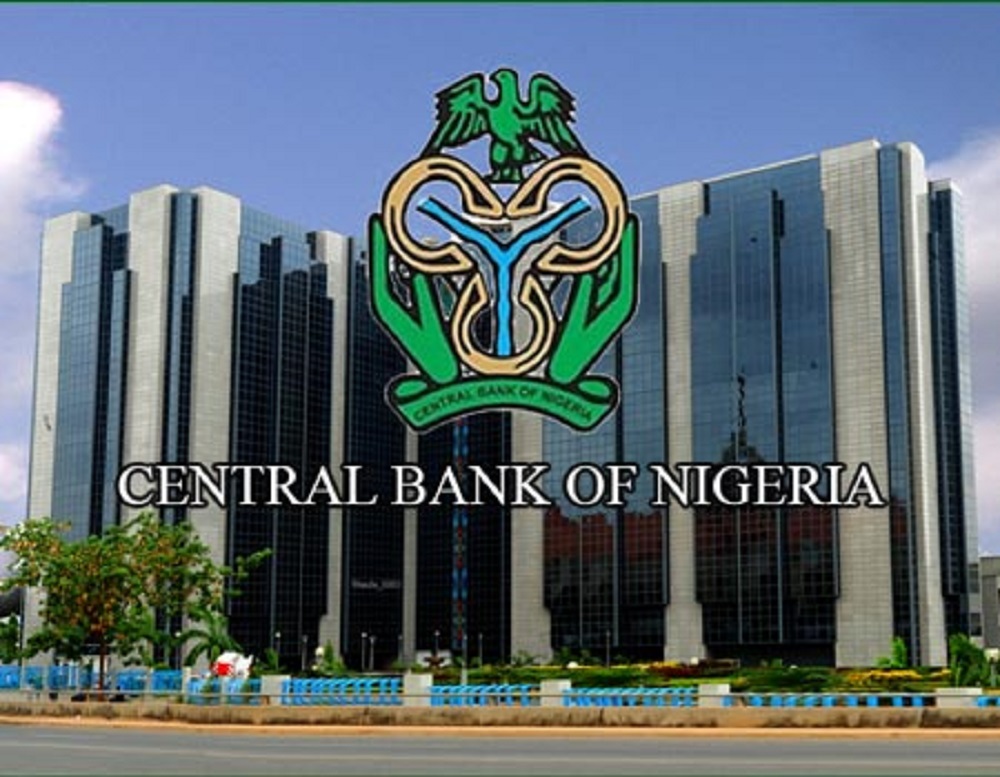
CBN head office

Crisis is a time when difficult or important decisions must be made. And that is what the Central Bank of Nigeria (CBN) did recently in the effort to manage the foreign exchange (Forex) challenge. CBN had noted that it would stop the sale of forex to banks by the end of the year. At a recent press briefing in Abuja, the Governor, Godwin Emefiele was decisive and direct. He said: ‘’the era is coming to an end when because your customers need $100 million in foreign exchange or $200 million, you now want to go to the CBN and pack all the dollars.’’ Continuing, Emefiele said, ‘’it is coming to an end before or by the end of this year. We will tell them don’t come to the Central Bank for foreign exchange again, go and generate from export proceeds.’’
The new policy is in CBN’s efforts to boost foreign reserves through proceeds from non-oil exports. Nigeria earns foreign exchange from four sources, namely, crude oil exports, non-oil exports, foreign direct investors, foreign portfolio investors and diaspora remittances. The apex bank had earlier introduced creative policies which boosted diaspora remittances as a result of which remittances increased from $3.84 billion in 2020 after the Covid 19 pandemic to $4.29 billion in Q1 2021, and further to $5.16 billion in Q1 2022.
Some of the policies that boosted diaspora remittances include the encouragement of Diaspora Nigerian to use the banking system to send their remittances, which allowed beneficiaries to have unrestrained access and utilization to foreign currency proceed either in foreign exchange cash and/or in their Domicilliary Accounts. Other such policies include the Naira 4 Dollar Scheme which rewards beneficiaries of remittances with N5 for every $1 remittance sent through the banks. The Naira 4 Dollar was commended by the World Bank. CBN also directed payment switching and processing companies to halt local currency transfer of remittances from the diaspora received through the International Money Transfer Operators ( IMTOs)
Encouraged by inflow of forex from other sources aside oil, CBN recently introduced a new policy known as the ‘’RT200’’ which stand for ‘’Race to $200billion’’. The RT200 targets the inflow of $200 billion inflow from non-oil sources in the next 3-5 years. According to Emefiele, the policy was in accordance with the best practices of other countries and for protecting the economy from external factors which are beyond our control.
The global oil market is dynamic and with changing perspectives which often affects the economy adversely any time there is a drop in crude price. If the global oil market sneezes, Nigeria’s economy quakes with disruptions in government’s revenue projections. According to Emefiele, ‘’Nigeria cannot continue to depend on forex earning to fund its import obligations from revenue coming from products where we cannot determine price and quantity.’’
CBN has continually demonstrated ingenuity and doggedness in the efforts to manage the forex challenge both from the supply and demand side. The forex challenge is historic and somehow intrinsic. Over the years past CBN had been on the matter through the evolution of varied and checkered policies. The problem of foreign exchange and the Naira can be traced to the implementation of the Structural Adjustment Programme (SAP) in 1986. Nigeria reformed its foreign exchange system, trade policies and business and agricultural regulations.
SAP encouraged devaluation of the Naira which encouraged importation and discouraged manufacturing and industrialization. Progressively over the years Nigeria became a heavily import-dependent economy without a corresponding manufacturing base and exports.
The development started putting pressure on foreign reserves which CBN had continually tried to manage over the years through the evolution of various policies such as the Second-Tier Foreign Exchange Market (SFEM), Foreign Exchange Market (FEM), licensing of Bureau de Change, introduction of the Floating Rate and Autonomous Foreign Exchange Market and others.
Fast forward to 2016, CBN under Emefiele has evolved several other creative policies to manage the forex challenge. Some of such policies have been aforementioned above. The latest is the RT200 which aim at stimulating the inflow of $200 billion from non-oil sources in 3-5 years. It is believed that the policy will achieve its target projection which will help to ameliorate the problem and help the exchange rate and stabilize the naira which is currently in distress. But the real and permanent solution will be in building a strong manufacturing and export base so that there will be a balance of outflow and inflow of forex . CBN has also evolved policies in that regard which are believed would create the desired impact in the long run.
Nwobu, a Chartered Stockbroker and Business Journalist wrote via arizenwobu@yahoo.com. Tel: 08033021230