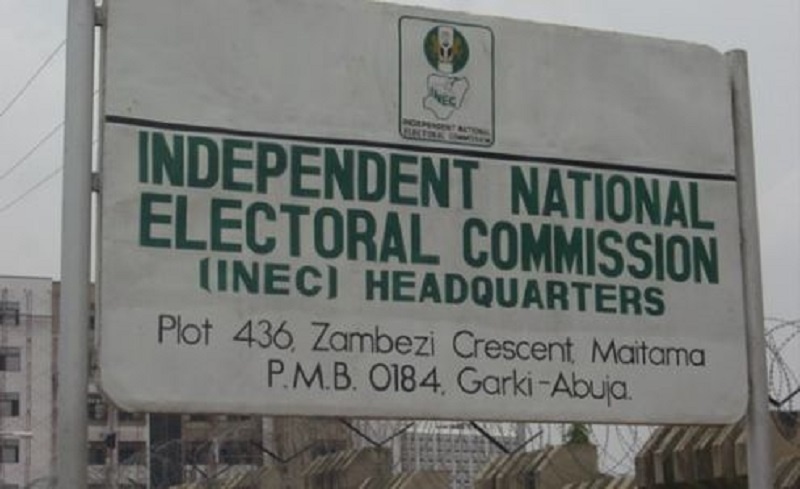
INEC-Office

Our habit of amending our electoral laws almost every election cycle deserves serious scrutiny. The popular justification, continuous improvement, sounds persuasive but does not withstand close examination.
It cannot be the case that credible elections are only possible if electoral laws are rewritten every four years. If that were true, stable democracies would be in permanent legislative flux. Countries such as the United States, the United Kingdom, Germany, France, South Africa, the neighbouring Ghana and Benin Republic all conduct regular elections. Yet, it is difficult to find evidence that they amend their electoral laws before every round of general elections. Their systems improve not because the rules are endlessly rewritten, but because institutions mature, enforcement is strengthened and political actors improve at internalising democratic norms.
The question, therefore, is not what laws they are passing, but what behaviours and institutional disciplines they are sustaining that we are not. I am all for compulsory electronic transmission of election results. But it is drunkenly optimistic to assume that merely writing it into law will automatically improve electoral outcomes.
We must understand that laws do not conduct elections. People do. The fixation on legal amendments often obscures a more uncomfortable truth. Nigeria’s electoral problems are less about rules and more about conduct.
Our political class and, increasingly, civil society actors, have become addicted to buzzwords. Every election cycle produces a fresh vocabulary designed to animate advocacy, sustain NGO ecosystems and give the impression of reform. But elections will only improve when politicians accept a basic democratic reality. In every contest, someone wins and someone loses.
The controversy surrounding the 2023 presidential election illustrates this problem clearly. The candidate who came third has continued, years later, to insist that he won. He attributes his loss to rigging, particularly the alleged failure to transmit results in real time to the IReV portal.
It has been nearly three years since we had the election that produced President Bola Tinubu and just as long since results from over 170,000 polling units were uploaded to the portal. If the results declared and signed at polling units truly differ from those published online, three years offer more than enough time for political parties, civil society organisations and election observers to present credible counter-results. None has done so.
This silence is telling. The reality is straightforward. Voting is manual. Ballot papers are counted manually. Results are written manually after BVAS accreditation. Party agents sign these results and retain copies. Whether transmission is delayed or instantaneous does not alter what was recorded at the polling unit.
Technology can enhance transparency, but it cannot manufacture outcomes. The most significant electoral reforms Nigeria has achieved since 1958 are the Permanent Voter’s Card and electronic accreditation via BVAS. These innovations have drastically reduced ballot stuffing and election-day brigandage. No polling unit can now return results exceeding the number of accredited voters captured on BVAS. That is real reform, not rhetorical progress.
If compulsory real-time transmission of results will provide emotional or psychological reassurance to aggrieved actors, the National Assembly can include it. But it should do so without illusions.
Those determined to reject defeat will always find something else to blame. If not IReV today, it will be another contrivance tomorrow. Nigeria does not suffer from a shortage of electoral laws. It suffers from a shortage of democratic restraint, institutional discipline and political maturity. Until those change, no amount of legislative tinkering will deliver the elections we claim to desire.
–Ajayi is Senior Special Assistant to President Tinubu on Media and Publicity