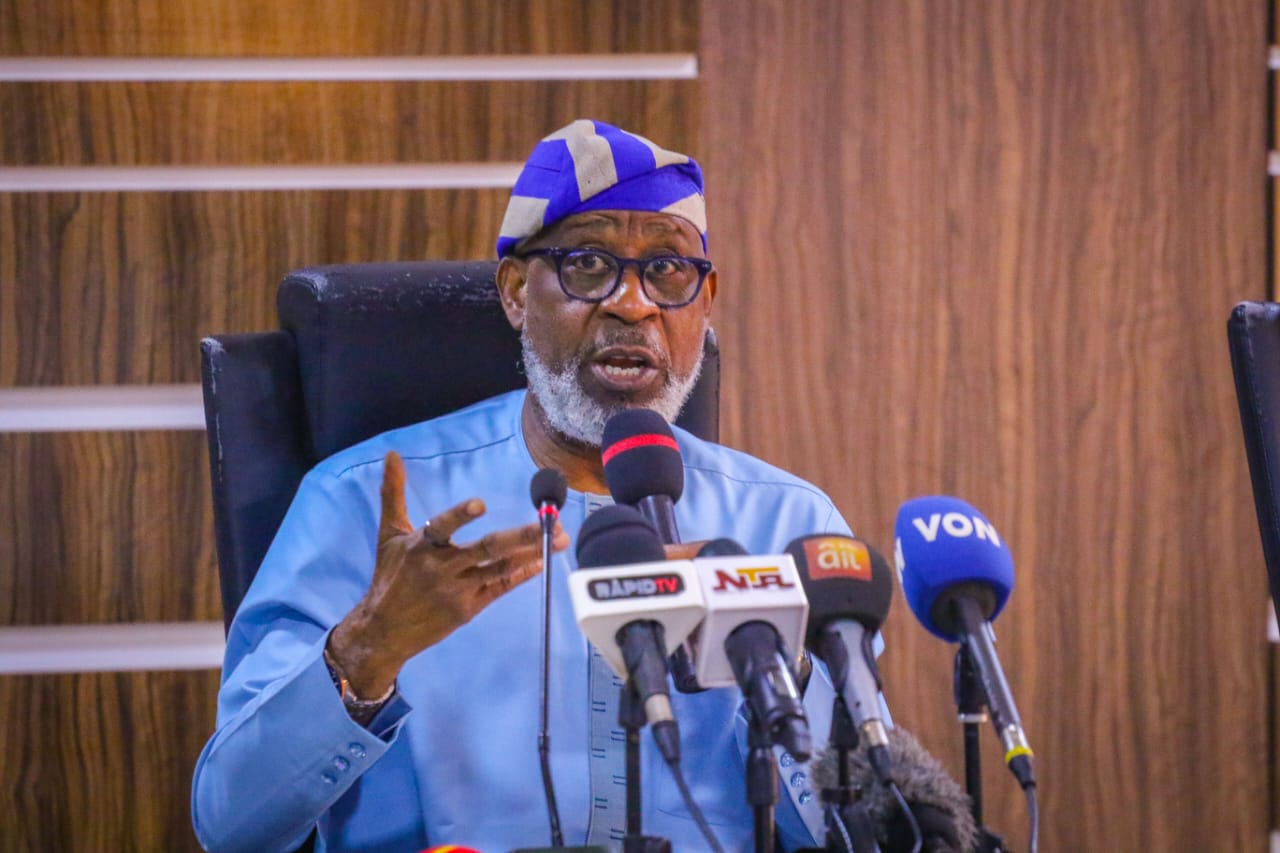
Nigeria's mineral minister, Dele Alake
As African nations push miners to build refineries and smelters at home, government and industry officials say a major obstacle risks crimping investment: a shortage of cheap, reliable electricity.
From Guinea’s bauxite to Zimbabwe’s lithium, governments are using export curbs, tax incentives and access to deposits to encourage local processing and capture more value from their mineral wealth.
Investors including the US International Development Finance Corporation and Africa Finance Corporation are backing African processing projects and plan to do more.
But the decline of South Africa’s ferrochrome and steel processing industries highlights the risks when power is expensive or unreliable.
GUINEA’S DOWNSTREAM BET
Guinea is one of the boldest examples of Africa getting more value out of its mining resources. It recently overtook Australia as the world’s largest bauxite producer and exporter, with most of its exports going to China.
Bauxite is a feedstock for alumina, a key ingredient in aluminium widely used in the transport, construction and packaging industries.
Daouda Diakite, a senior adviser to Guinea’s mines minister, said three alumina refineries were under construction.
The government wants five by 2030 with total annual production capacity of about 7 million to 8 million tons, followed by investments in aluminium smelters.
Unlike Indonesia, whose export ban on unprocessed nickel helped attract billions of dollars of investment into domestic smelters and battery production, Guinea is taking a different path.
It has said it wants to limit bauxite export volumes to avoid flooding the market, which pushes prices lower, although it has yet to introduce the curbs.
Diakite said investors who want bauxite would also be steered towards investing in smelters or railways, with mining rights and some tax holidays on offer as incentives.
In the iron ore sector, Guinea is also fast-tracking the development of ore pellet plants.
“The next step will be the steel (production),” Diakite said on the sidelines of the African Mining Week conference in Cape Town last week.
‘SUSTAINABLE, STABLE ENERGY’
Insufficient electricity, however, poses a major threat to the sector’s ambitions. Diakite said Guinea generates about 1,000 megawatts (MW) mostly from hydropower.
It exports power to Senegal, Gambia and Guinea-Bissau in the rainy season from April/May to November but has to import from Ivory Coast or Senegal in the dry months.
The West African nation needs 5,000 MW to 10,000 MW to support its industrialisation, including the aluminium smelters, he said.
“The main issue is infrastructure and energy, mostly energy,” Diakite said. “We need sustainable and stable energy. We are looking for investment in all economically viable energy solutions, including gas, coal, and nuclear.”
Guinea has no coal. Diakite suggested ships that arrive empty to load bauxite could pick up coal in South Africa or Mozambique on the way to Guinea.
Advertisement · Scroll to continue
LESSONS FROM SOUTH AFRICA
South Africa’s ferrochrome smelting industry shows what can go wrong. Dozens of smelters have shut in recent years largely due to a roughly tenfold increase in power costs since 2008.
Less than a dozen of the country’s 66 ferrochrome smelters are operating.
“The number one lesson is how important energy supply reliability and affordability are to industrialisation,” said Mzila Mthenjane, CEO of the Minerals Council South Africa.
High power costs made South African ferroalloys uncompetitive with China. As South Africa struggled, China built both processing capacity and cheap power to run it on, becoming the world’s top refining hub.
South Africa holds over 70% of the world’s known chrome reserves, yet China is the largest ferrochrome producer.
“Now we have to compete with that,” Mthenjane said.
Across the border, Australian diversified miner South32 (S32.AX), opens new tab placed its Mozambique aluminium plant on care and maintenance this year after a drought hit power supply.
FOUR PILLARS
Mohamed Zada, Egypt’s deputy minister for strategic industries, listed four pillars of interest to investors: reliable feedstock, power, stable policy and committed buyers.
“We cannot focus on one and ignore the four pillars that are very important to be moving together,” Zada told delegates at the mining conference.
Franklin Edochie, deputy director and head of mining at Africa Finance Corporation, which helps finance development and infrastructure projects on the continent, said access to capital was also key.
“Energy is one of them, feedstock and capital are another one because when we talk about value-added products, you’re talking about multi-billion dollar projects,” Edochie said.
“We produce very high quality products on the continent, we always have buyers.”