September 27, 2024
At least five African countries are working on what could be the world’s first joint “debt-for-nature” swap to raise at least $2 billion to protect a coral-rich swathe of Indian Ocean, according to a global conservation group.
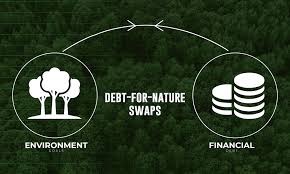
Debt-for-nature deals are becoming increasingly popular for poorer nations to pay for conservation. Bonds or loans are bought and replaced with cheaper debt, with savings used for environmental protection.
Ecuador, Barbados, Belize, Gabon and Seychelles have all made such swaps in recent years, but the African initiative would be the first to involve multiple countries sharing a distinct ecosystem.
Thomas Sberna, regional head for coastal and ocean resilience at the International Union for the Conservation of Nature (IUCN), did not name the five African nations considering the joint swap deal.
But he said those backing the broader “Great Blue Wall” conservation plan include Kenya, Madagascar, Mauritius, Mozambique, Seychelles, Somalia, South Africa, Tanzania and the Comoros.
First announced in 2021, the plan is backed by the U.S. and British governments and aims to protect and restore 2 million hectares of ocean ecosystems by 2030, benefiting some 70 million people in coastal communities.
Sberna said such ambitious deals were important for speeding up conservation.
“If we want to really deliver a substantial impact in the next five years we cannot just continue issuing them one by one,” said Sberna, who is involved in the talks.
Historically, countries have struggled to agree on issues such as fishing rights and who pays for environmental measures, so the hope is a regional deal will overcome that and attract investors.
Getting more finance to help countries protect biodiversity is a central part of the next round of global talks in Colombia in October after a landmark deal in 2022 to protect 30% of the world’s seas and land by the end of the decade.
With many countries on the front lines of the climate crisis heavily indebted and requiring up to 20% of their GDP to build resilience, opens new tab, Sberna said radical measures were needed.
“We need to leapfrog from 1%- 2% of marine-protected or marine-conserved areas to 30% in less than 10 years,” Sberna said.
“There is no way we could really achieve [that] using the same business as usual model.”
NEGOTIATIONS
Sberna said he hoped a blueprint for the deal could be agreed in time for a U.N. Oceans Conference, next June.
Kenya, Tanzania and Mozambique have all lost significant portions of mangrove shoreline, coral reefs and fish stock since the 1980s, threatening loss of livelihoods, food security and income from tourism.
Key details such as how much of each country’s debt is brought up and who decides and monitors how and where the conservation money is spent, all require lengthy negotiation.
Sberna said that to aid this process, the IUCN and others were looking at the idea of a specialist fund worth at least $2 billion, made up of $500 million of concessional funding and $1.5 billion of bond swap money.
Sberna said discussions were also being held with some of the main multilateral development banks in the region about offering credit guarantees and insurance policies for the swap.
These are vital as they cut the interest rates countries have to pay on the new “blue” or “nature” bonds which replace their more costly existing debt.
At the same time, some of the region’s ocean-reliant fishing, shipping and tourism companies were also looking at debt-for-nature swaps of their own, he said, declining to name them.
Madagascar, whose 250 islands are home to some of the world’s largest coral reef systems and most extensive mangrove areas in the Western Indian Ocean, confirmed it was in talks although there was still a way to go.
“Many partners have already come forward,” the country’s Minister of Finance Rindra Hasimbelo Rabarinirinarison told Reuters, “but negotiations are still at the appraisal stage”.
Other countries did not provide a comment.
REUTERS