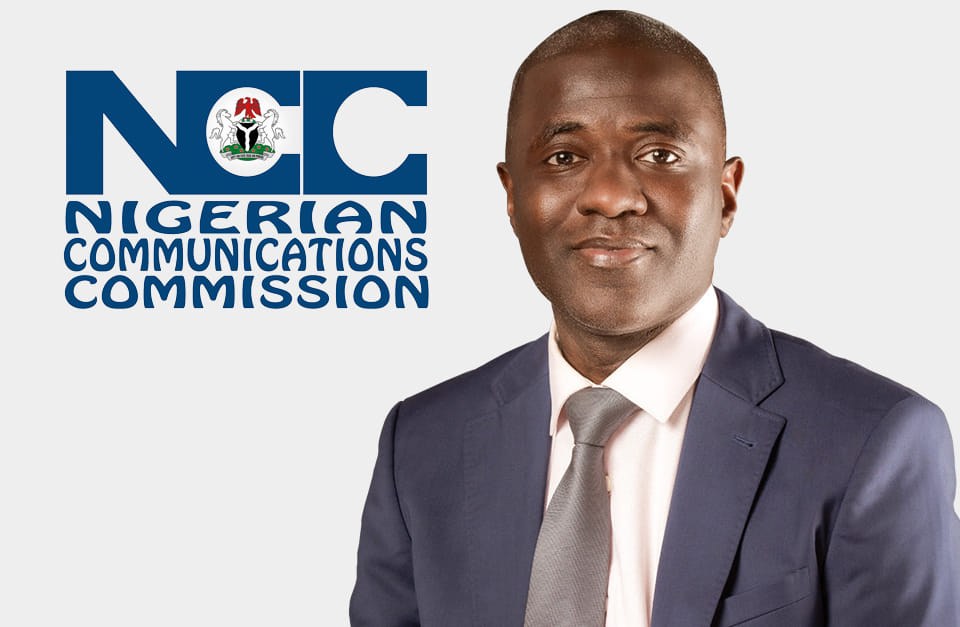
Dr Aminu Maida NCC EVC

It is with great pleasure that I welcome you to this important Stakeholder engagement
on the Draft General Authorisation Framework. Your participation today reinforces
our united vision for a digitally inclusive Nigeria.
The growth of the telecommunications sector in Nigeria has been phenomenal. In the
last 24 years, following the liberalization of the sector, we have witnessed tremendous
transformation leading to the achievement of over 79.65% tele-density and a
Broadband Penetration of 48.81% as at May 2025.
This progress has been driven by the rapid uptake of mobile technologies, surging data
consumption, and an increasing appetite for digital services. But we are now at a turning
point, where the nature of innovation demands a regulatory paradigm that is not only
responsive but enabling.
As a catalyst for national development, Nigeria’s telecommunications industry has
become a symbol of innovation and progress. It has revolutionized communication,
improved access to information, and reshaped business operations.
Today, we are at a significant juncture, where disruptive innovations are accelerating
the evolution of the communications ecosystem. Broadband Penetration continues to
grow, while digital literacy is on the rise. These are creating a solid foundation for a
vibrant digital economy driven by accessibility, innovation, and inclusivity.
Technological innovation is accelerating across the world and nation, particularly within
the telecommunications sector. Every day, we learn of how innovators are pushing
boundaries with daring ideas, venturing into new frontiers of innovation, and expanding
the possibilities of our sector. From 5G deployment and AI-driven smart networks, to
blockchain applications and fintech advancements, these developments are driving
profound change in the telecommunications ecosystem. They are reshaping critical
sectors including communications, finance, education, and governance and unlocking
vast potential for inclusive growth, enhanced service delivery, and sustainable national
transformation. But we are now at a turning point, where the nature of innovation
demands a regulatory paradigm that is not only responsive but enabling.
Modern regulation must be designed to enable innovation rather than hinder it. This is
an objective that lies at the core of the Nigerian Communications Commission’s (NCC)
latest initiative: the General Authorisation Framework. This reform introduces a
flexible and responsive regulatory licensing approach that is structured to embrace new
and emerging services that fall outside the existing License Structure.
The framework introduces three key instruments:
- Proof-of-Concept pilots to validate novel ideas in real-world environments.
- A Regulatory Sandbox, which allows innovators to test solutions—such as Open
RAN trials, or dynamic spectrum sharing—under controlled and risk-managed
conditions.
- An Interim Service Authorisation for services that do not yet fit within existing
license categories.
By adopting this approach, we are providing a platform for innovators of various
sizes—whether they are startups or established companies—to demonstrate feasibility,
assess risk, and measure outcomes before deployment. This model encourages
experimentation and responsible innovation while safeguarding consumer rights and
public interest.
However, regulation alone is not enough. You—our stakeholders—are central to the
success of this framework. Mobile Network Operators, Service Providers,
Infrastructure Companies, OEMs, startups, civil society, and academia all have a role
to play. Your insights, your ideas, and your partnership are critical in refining this
approach and making sure that it works for Nigeria.
As we look to the future, we must ensure that no one is left behind. That means
expanding access, closing connectivity gaps, and empowering our youth, women, and
underserved communities through inclusive innovation.
The future of Nigeria’s digital economy is no longer distant. It is unfolding right before
- And at the heart of this future is the communications sector—our shared
infrastructure for innovation, inclusion, and economic advancement.
To sustain momentum, we must be bold, collaborative, and committed to building a
resilient and innovative ecosystem. Through the General Authorisation Framework, we
are unlocking new pathways for experimentation, market entry, and growth.
Let us work together to deepen the innovation value chain, nurture homegrown
solutions, build investor confidence, and ensure that the dividends of digital
transformation reach every corner of our society.
It is my hope that today’s engagement will spark your curiosity, refine our collective
vision, and accelerate our journey towards a more connected, innovative, and
prosperous Nigeria.
Being excerpts of speech delivered by the Executive Vice Chairman/CEO of the Nigerian Communications Commission (NCC), Dr. Aminu Maida during the stakeholders’ forum on General Authorisation Framework for the Nigerian telecoms industry on Thursday, July 17, 2025.