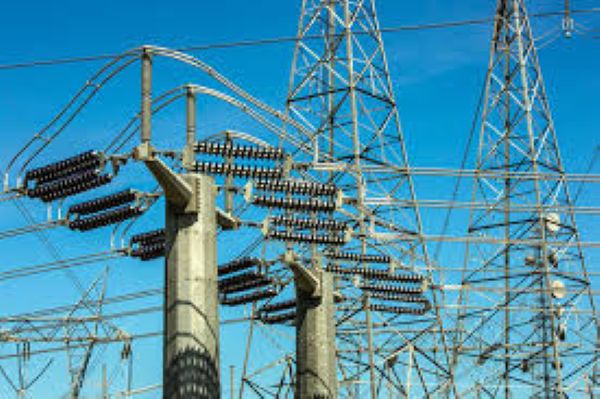
Electricity grid

Last week, an ecstatic Sheriff Oborevwori signed into law, a bill he touted as a “game changer”. It was the Delta State Electricity Power Sector Law Bill 2024.
Since the Electricity Distribution Companies were created in what was supposed to be a commercialisation and privatisation exercise, it had been a tale of betrayal of whatever may have inspired the programme under former President Goodluck Jonathan. The DISCOs turned out to be colossal failures for which the Benin Electricity Distribution Company (BEDC) has the dishonour of being the most abysmal performer.
For a sector that determines the success or lack of it of an economy, the stagnated growth of Nigeria is not tough to discern. President Bola Tinubu seemed to have realised this in his days as governor of Lagos State. He recruited Enron, a private firm, that installed the first plant for generation and distribution of electricity. That venture would have pioneered the ultimate liberalisation of the energy sector and unbundle the disgraceful national grid that has kept Nigeria down and stunted since Independence. While the country was administratively structured as a federation, it was not adopted in the generation and distribution of electricity. While education, health and other critical sectors created a level playing field with every region at liberty to evolve its own strategy, in the first republic, such competitive atmosphere was denied the energy sector.
While the first television station in Africa came from Nigeria courtesy of the Western Region and many other firsts from the lively competition among the regions, electricity was tied to the dumb elephant that is the exclusive list. As the the federal government steadily presided over the evolution of Nigeria into a dark nation, so has the entire nation been bogged down by officialdom, corruption, absence of a coherent energy policy and indolence. While no state could venture into investing into the energy sector due to constitutional impediments, the country was burdened with successive teams of misfits that had no idea what was needed to drive the growth of the economy and power industrialisation.
According to Godknows Igali, permanent secretary at the Ministry of Energy in 2015, over N2.74 trillion has been spent on the power sector since 1999. This is not today’s trillion which amounts to just about two billion naira. It was much more. The Nigeria Integrated Power Project (NIPP), one of the several initiatives taken to boost power generation and distribution, received $8.3 billion from excess crude account alone to fund 10 power plants only. Despite the investigations carried out by the National Assembly, it is difficult to ascertain the true state of the plants. If there is any reliable indicator of the success of the initiatives, the real output of power for distribution on the national grid should tell it all.
The average daily power generation in Nigeria typically hovers around 4,000MW daily, although this figure can fluctuate depending on various factors, including season, weather conditions, and infrastructure issues. While the total installed capacity in Nigeria exceeds this amount, the actual power dispatched to the grid is often lower, leading to power shortages. Even though, Nigeria’s total installed generation capacity is said to be significantly higher, potentially exceeding 12,500MW, the power dispatched to the grid is often significantly lower and hovers around 4,000 megawatts.
With a land mass of 923,768 km², it is just implausible that a policy could be formulated to have a common grid for a country of such size. It was designed to fail and will continue to fail. The amendment effected on the 1999 constitution that transferred energy to the concurrent list represents the platform for addressing Nigeria’s energy challenge. Unfortunately, the federal government and the interest groups promoting a corresponding federal agenda to boost electricity distribution is still receiving attention. The move has denied the energising needed from the federal government to make investments by the private sector and states more attractive.
To Oborevwori, he has a template to fall back on. A few years ago, Ifeanyi Okowa as Delta State governor, got on stream a programme that weaned all government institutions in the state from the epileptic national grid. The Asaba Independent Power Project, a gas-powered plant that generates 8.5 megawatts of electricity, is the product of a collaboration with a private company. It supplies power to the Government House and the ultra modern secretariat. It is a blueprint to leverage on.
As Oborevwori pointed out while signing the electricity bill into law, the new law actively encourages PPP arrangements for financing and managing infrastructure projects, including power generation.
The state offers tax breaks, subsidies, and guarantees to attract private investment in power generation and renewable energy projects.
Delta State is developing clear and transparent regulatory frameworks to build investor confidence in the power sector. So should other states. That is the way to go, not waiting for Abuja.
Umahi, the nightmare is back in Asaba
At the peak of the rainy season in 2024, when the main artery to the Niger bridge had completely collapsed, Governor Sheriff Oborevwori sought to alleviate the nightmare road users were having, officials of David Umahi’s Ministry of Works intervened to stop the Commissioner for Works, Charles Aniagwu, from proceeding with the assignment his boss gave him.
According to the Works Ministry officials, contract had already been awarded in Abuja for the rehabilitation of the road that links Anambra State through the old Niger bridge.
In truth, the contractor moved to site and the deep gullies and muddy water caused heavy gridlock at the Ezenei area and laid boulder stones, hardcore, and a stone base on the failed portions of the road. The actual reconstruction that ought to have commenced at the end of the rains never got off the ground. The contractor is said moved out of the site.
A new rainy season has caught up with the failed sections and the nightmare has returned. This is calling on Minister David Umahi to save road users that traverse the critical highway to the east.