Akin Ogunlade argues that democracy in Nigeria is assuming the halo of authoritarianism with the recent declaration of state of emergency in Rivers State.

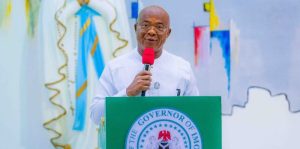
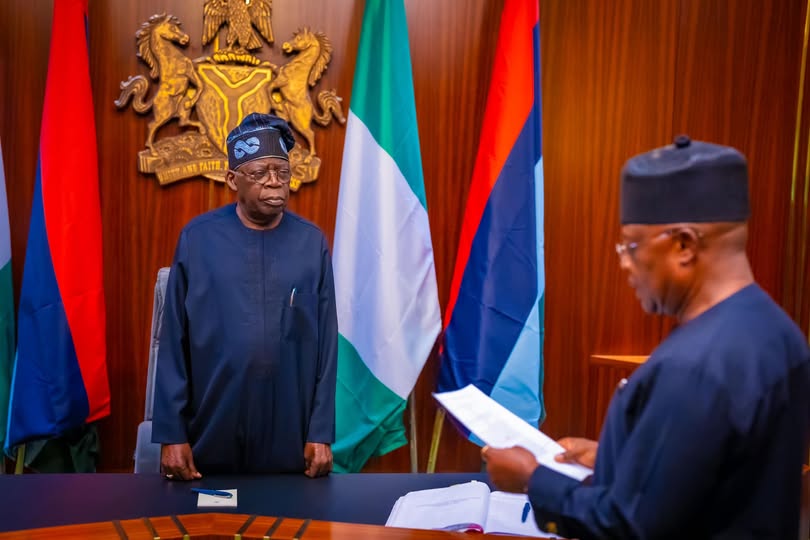
The recent declaration of a state of emergency in Rivers State by President Bola Tinubu has ignited a national debate about the trajectory of Nigeria’s democracy. While the government justifies the move as necessary to restore order, critics argue that it is a dangerous precedent, signaling a shift toward authoritarian rule under the guise of democracy. This development raises fundamental concerns about constitutional governance, the separation of powers, and the potential erosion of democratic freedoms.
Nigeria operates a federal system where states should have significant autonomy. However, the president’s unilateral action in Rivers State undermines this principle. If a governor can be suspended at will under the justification of security concerns, what stops the federal government from extending this power to other states? This overreach threatens the ability of state governments to function independently, making them vulnerable to federal manipulation and political control.
One of the most alarming aspects of this crisis is the National Assembly’s swift approval of the president’s decision. Ideally, the legislature should act as a check on executive power, ensuring that decisions align with constitutional principles. However, their near-instant support raises serious concerns about the separation of powers. If lawmakers simply endorse executive actions without scrutiny, it signals a collapse of democratic safeguards, leading to a system where the president’s decisions go unchallenged.
Legal experts, including the Nigerian Bar Association, have challenged the constitutionality of this emergency rule. According to Nigeria’s 1999 Constitution, a state of emergency does not automatically dissolve elected governments. However, if the judiciary fails to assert its independence and rule against such unconstitutional actions, it will further cement the executive’s dominance over all arms of government. A compromised judiciary means that citizens can no longer rely on the courts to protect their rights against state overreach.
Authoritarian regimes often use legal mechanisms to weaken opposition, and this case appears to follow that pattern. The removal of an elected governor under the guise of security concerns raises the question: Is this about stabilizing Rivers State, or is it a political strategy to control the state? If opposition leaders can be removed so easily, Nigeria risks becoming a one-party state where dissent is silenced through executive power rather than democratic elections.
Today, the federal government has justified overriding an elected governor due to security concerns. Tomorrow, this justification could extend to suppressing protests, censoring the media, or even cracking down on citizens who criticize the government. The normalization of such authoritarian tactics can gradually erode democratic freedoms, creating an environment where fear replaces free expression.
Nigeria is at a crossroads. The nation can either uphold democratic principles, where power is decentralized, and institutions function independently, or continue down the path of executive dominance, leading to full-blown authoritarian rule. The key question remains: Will Nigerians, civil society organizations, and the judiciary push back against this trend, or will this moment mark the beginning of a new era where democracy exists only in name?
If history is any guide, unchecked executive power rarely reverses itself. It takes active resistance from the people, institutions, and the international community to prevent democratic backsliding. The world is watching, and the choices Nigeria makes today will define its democratic future.