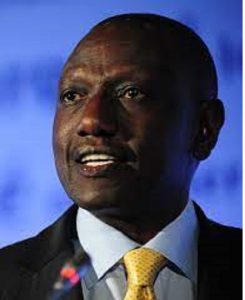
Yemi Cardoso

Governor, Central Bank of Nigeria (CBN), Olayemi Cardoso has been decisive in his policy options and tried to roll back and streamline the functions and operating frontiers of CBN to minimize wastages and increase efficiency.
Cardoso, swiftly abrogated development financing and intervention funds for agriculture and other sectors which were established by his predecessor. Some of the intervention funds of CBN include, the Anchor Borrower’s Programme (ABP), Commercial Agriculture Credit Scheme (CACS), Accelerated Agriculture Development Scheme (AADS), Maize Aggregation Scheme, Paddy Aggregation Scheme and Private Sector-led Accelerated Agricultural Development Scheme and others.
CBN had noted that the intervention schemes were established to improve local food production, reduce food import bill and conserve foreign reserve. Due to the absence of vibrant capital and money markets in developing countries, central banks in developing countries are expected to fill the funding gap by performing both the traditional and non-traditional functions and using development financing as a tool to accelerate economic growth and adapt and for the reduction of poverty and income inequality.
As noted by Gerald Epstein, Professor of Economics, University of Massachusetts, Amherst, USA, central banks in developing countries have under powers to promote economic growth by adopting the policy of “Controlled Expansion” of bank credits to undertake direct financing of development projects. It further noted that central banks frame their monetary and credit policy in such a way that larger and desired quantities of bank credit go to primary sectors such as agriculture, small industries, export trade, corporations, etc.
Development financing played a significant role in accelerating industrial development in India. India has been methodical in driving economic development. After 1991, the country phased out Development Financing Institutions (DFIs) and established new institutions, including the National Investment and Infrastructure Fund (NIIF) to focus on funding infrastructure.
Cardoso stopped development financing because of the magnitude of the outstanding debts from the interventions schemes especially the Anchor Borrower’s Programme (ABP) which was established in 2015. The IMF reported that 76 per cent of loans under ABP were unpaid only 24 per cent were paid.
Reportedly a total of 4.67 million farmers in various crops were involved in the programme and about N1.12 trillion was disbursed to 563 anchors. The sum of N670.4 billion was repaid leaving an outstanding of N450.90. The development is not encouraging and which is a good reason for the discontinuation of development financing by Cardoso, so that CBN could focus on its core mandates. But it is noteworthy that the Anchor Borrowers Programme (ABP), reawakened the interest of many to return to farming.
Cardoso and his team also launched a wild fight against inflation with the quantum hike in the Monetary Policy Rate (MPR) by 400 basis points, from 18.75 per cent to 22.75 per cent and further to 24.74 per cent, and presently to 26.25 per cent.
The CBN Governor acknowledged the necessity for a trade-off between spurring economic growth and implementing the inflation targeting policy. All over the world, central banks are obsessed with inflation and they deploy significant amount of resources to fight inflation to ensure price stability.
Inflation creates many negative impact in the economy. As CBN noted, inflation devalues currency, discourages long term plantings and reduces savings and capital accumulation. It also reduces investment, creates shifts in the distribution of real income and consequent misallocation of resources, and uncertainty and distortions in the economy.
Present inflation is cost-push, there is a general increase in the cost of production, and also because of expansionary fiscal policy. It is widely believed that the previous government increased money supply by Ways and Means and foreign debts, at a rate greater than the growth rate of the GDP. Other causes of inflation include disruptions in the supply of food products and increase in pump rate of fuel.
CBN is working hard to find lasting solutions to the problems of the economy. Cardoso and his team has reset policy tool kits towards ensuring stability in the short to medium term.
Efforts should also aim at increasing the supply side of the economy. It has been noted by experts that it is the supply side production potential that gives an economy the energy to grow without suffering from acceleration in cost and price inflation.
Nwobu, a Chartered Stockbroker and Policy Analyst wrote via arizenwobu@yahoo.com ,
Tel: 08033021230